In this guide
- Who Are the Amazigh?
- Language: Tashelhit and the Tifinagh Script
- Village Life and Architecture
- Hospitality and the Mint Tea Ritual
- Food of the Atlas
- Crafts, Dress and Jewellery
- Festivals and the Amazigh Calendar
- Weekly Souks
- Etiquette for Visitors
- Frequently Asked Questions
- Where to Experience Amazigh Culture
- Meet Village Families on Foot
The Amazigh (commonly called Berbers) are the Indigenous people of North Africa, and in the High Atlas most villagers speak Tashelhit, one of several Amazigh languages. Their culture is visible in earthen pisé villages, terrace farming, weekly souks, bread baked in clay ovens and a strong tradition of hospitality centred on mint tea. Visitors are warmly welcomed when they dress modestly, ask before taking photos and accept tea when it is offered.
Who Are the Amazigh?
The word Amazigh (plural Imazighen) is usually translated as "free people", and it is the name many prefer over "Berber", a term that comes from the Greek and Latin word for foreigners. Amazigh communities were present in North Africa long before the Arab arrival in the 7th century, and today a large share of Moroccans have Amazigh roots, with the strongest linguistic presence in the Rif, Middle Atlas, High Atlas, Anti-Atlas and Souss.
In the High Atlas around Imlil, Asni and Ouirgane, families traditionally belong to tribal confederations and villages manage shared resources such as irrigation water and pastures through local assemblies, often called the jmaa.
Language: Tashelhit and the Tifinagh Script
Three main Amazigh languages are spoken in Morocco: Tarifit in the north, Central Atlas Tamazight in the Middle Atlas, and Tashelhit (Tachelhit) in the High Atlas, Anti-Atlas and Souss. Since the 2011 constitution, Amazigh has been an official language of Morocco alongside Arabic, and road signs and public buildings now display the ancient Tifinagh script — the characters that look like circles, crosses and lines.
A few words go a long way in the villages:
- Azul — hello
- Tanmirt — thank you
- Manzakin? — how are you?
- Atay — tea
Village Life and Architecture
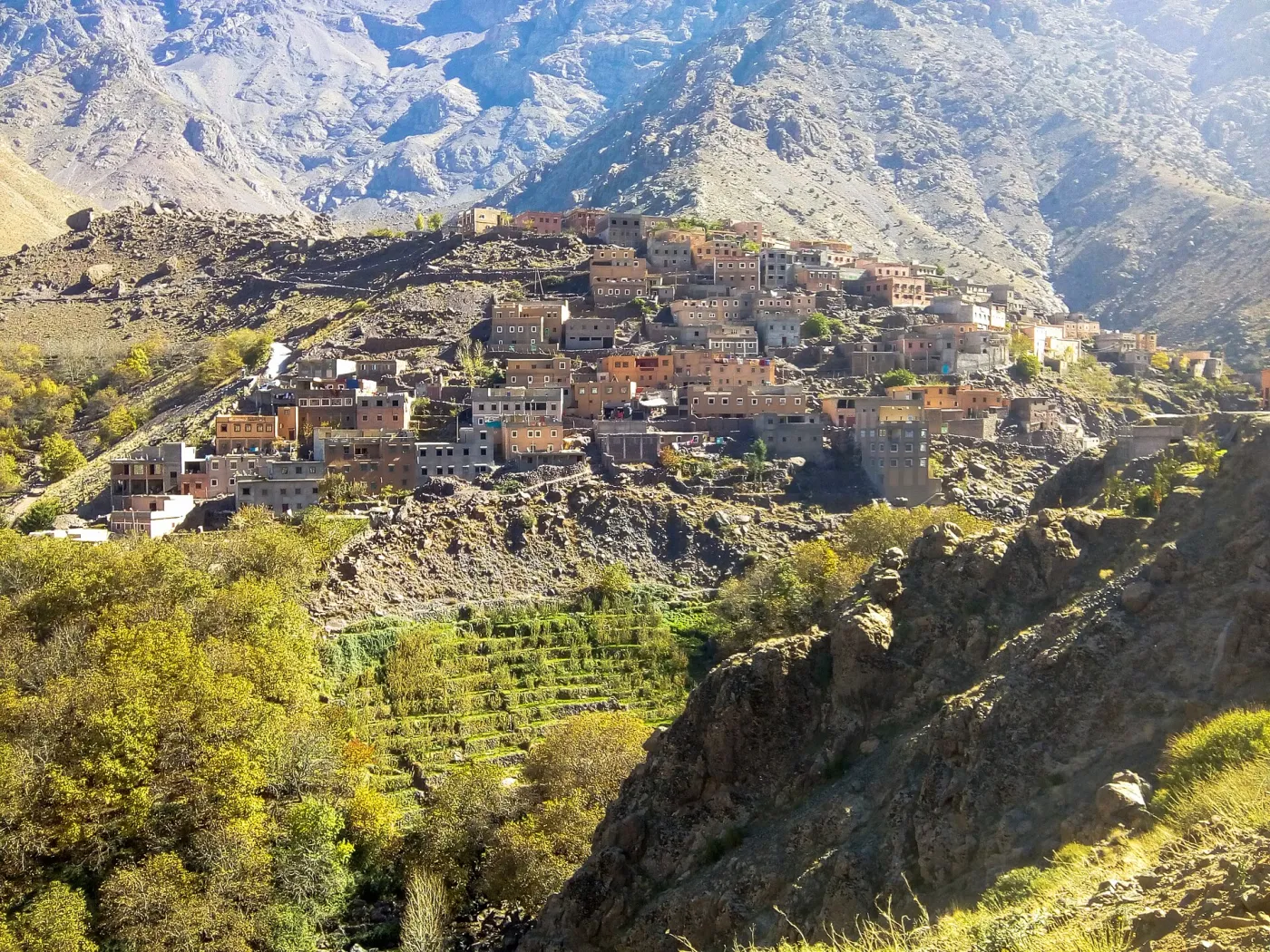
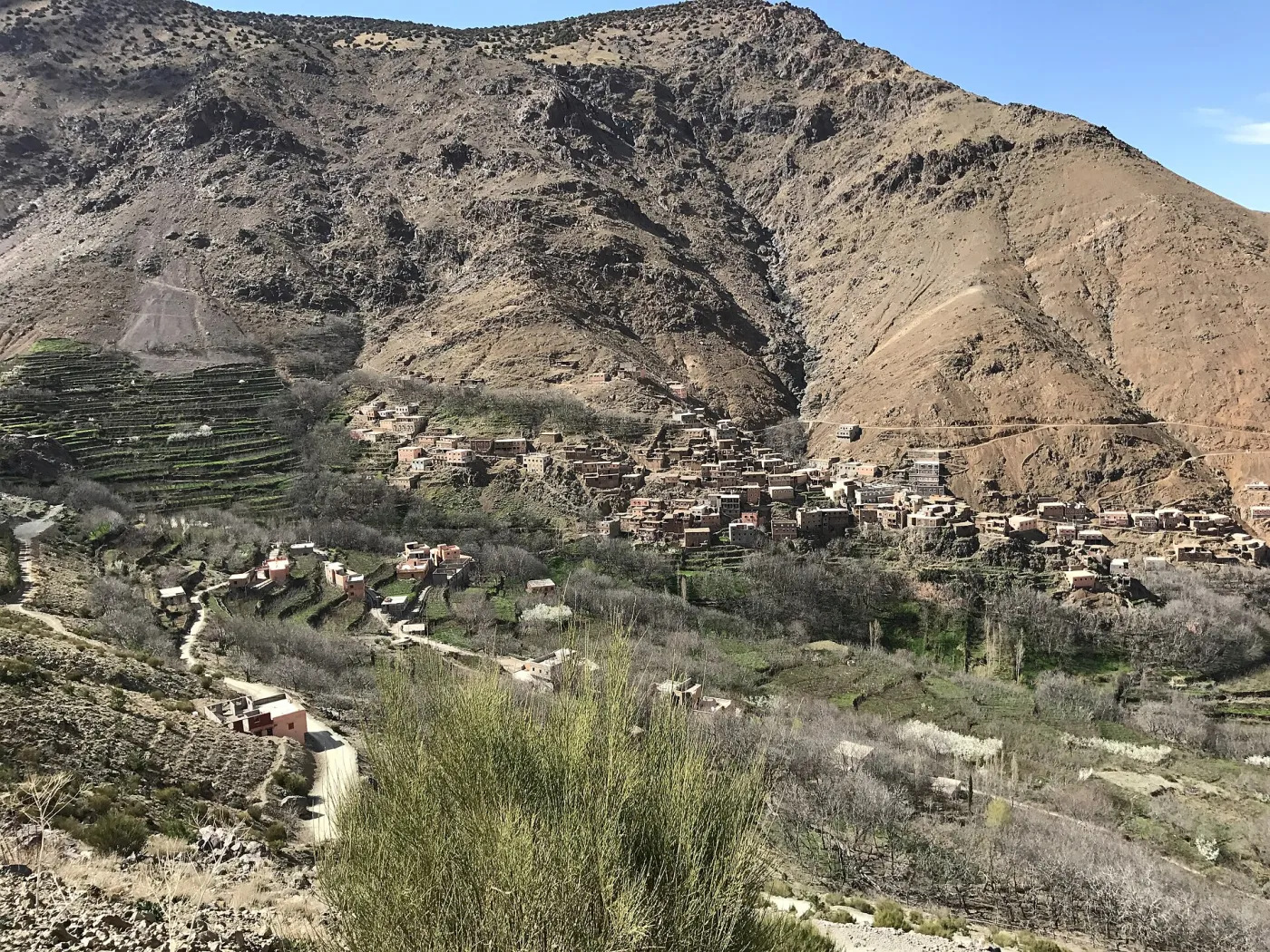
Atlas villages are built from pisé (rammed earth), stone and timber, with flat roofs used for drying crops and sleeping in summer. Houses cluster on rocky slopes to leave the scarce valley floor free for cultivation. Traditional agadir — fortified communal granaries — were once used to store grain and valuables, and a few still stand in the Atlas and Anti-Atlas.
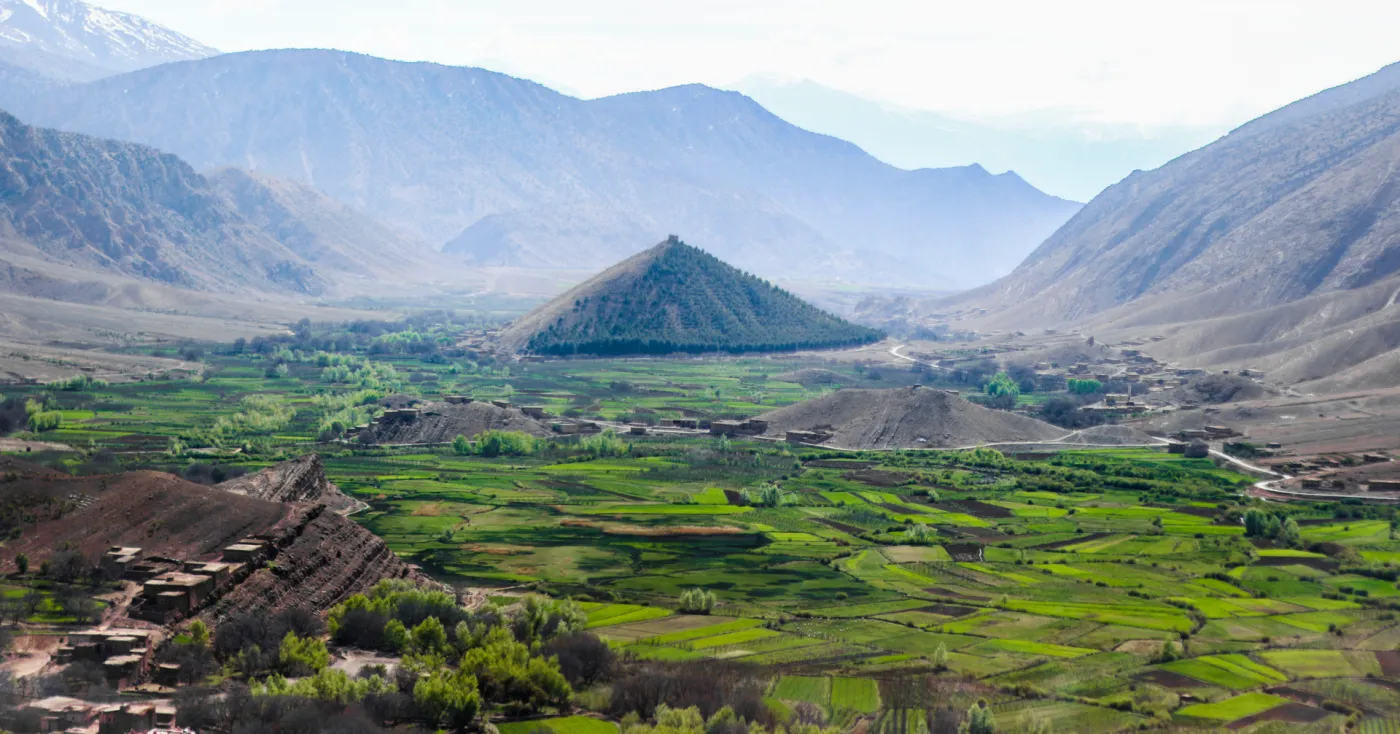
Agriculture revolves around irrigated terraces of barley, maize, potatoes, walnut, apple and cherry trees. Water is shared through channels called targa, with a rota deciding which family irrigates on which day. Mules remain the main transport where roads do not reach. The 2023 earthquake damaged many traditional houses; rebuilding now mixes earth construction with reinforced concrete, and you will see both side by side.
Hospitality and the Mint Tea Ritual
Being offered tea is the most common first encounter with Amazigh hospitality. Green gunpowder tea is brewed with fresh mint and plenty of sugar, then poured from height to create foam. It is customary to accept at least one glass; declining everything can seem cold. Tea is usually accompanied by fresh bread, olive oil, honey and amlou, a paste of roasted almonds, argan oil and honey.
Food of the Atlas
| Dish | What it is |
|---|---|
| Tagine | Slow-cooked stew in a conical clay pot, typically chicken, lamb or vegetables |
| Tanourt bread | Flatbread baked against the walls of a domed clay oven |
| Couscous | Traditionally served on Fridays after midday prayer |
| Tagoula | A thick barley or maize porridge eaten with butter and honey |
| Berber omelette | Eggs cooked with tomato and spices in a small tagine — the standard trekkers' lunch |
Crafts, Dress and Jewellery
Women in the High Atlas often wear brightly coloured headscarves and layered dresses, while men wear the hooded wool djellaba in cold months. Amazigh silver jewellery, with fibulae (brooches), enamel and coral, carries symbolic protective motifs, and woven rugs and kilims use geometric patterns specific to each tribe. Many villages have women's cooperatives producing carpets, argan products or honey; buying directly from them ensures money reaches the makers.
Festivals and the Amazigh Calendar
- Yennayer (Amazigh New Year): celebrated around 13–14 January, marking the agricultural year. It became an official public holiday in Morocco in 2024.
- Moussems: seasonal pilgrimages and fairs around saints' shrines, combining religion, commerce and music.
- Ahwach: the collective song and dance of the High Atlas, with frame drums (bendir) and lines of singers, performed at weddings and celebrations.
- Imilchil Marriage Festival: held in late summer in the eastern High Atlas, famous for its link to marriage traditions of the Aït Haddidou.
Weekly Souks
The weekly market is the social and economic heart of each valley. Asni's Saturday souk, on the road to Imlil, draws families from surrounding villages to trade vegetables, livestock, tools and household goods, and to visit the barber or dentist. It is authentic rather than touristic, and best visited in the morning.
Etiquette for Visitors
- Cover shoulders and knees; loose, light clothing is ideal.
- Always ask before photographing people, and respect a "no".
- Remove your shoes when entering a home's living room.
- Eat with your right hand when sharing a communal dish.
- Avoid giving sweets or money to children; support schools or cooperatives instead.
- During Ramadan, avoid eating or drinking openly in villages during daylight.
Frequently Asked Questions
Is it respectful to call people "Berber"?
The word is widely used in Morocco, including by many Amazigh people themselves, but "Amazigh" is the self-designation and increasingly preferred in public life. Using it shows awareness and is always appreciated.
Can I stay overnight with a Berber family?
Yes. Many village gîtes are family homes with guest rooms, and multi-day treks overnight in them. Expect simple rooms, shared bathrooms and generous home-cooked meals.
Do villagers speak French or English?
Younger people and those working in tourism often speak some French, Arabic and increasingly English; older residents, especially women, may speak only Tashelhit. A local guide bridges the gap and explains customs as you go.
Is Amazigh culture only found in the mountains?
No. Amazigh heritage runs through Moroccan cities too, including Marrakech, which was founded by the Almoravids, an Amazigh dynasty, in the 11th century. The mountains simply preserve rural traditions more visibly.
Where to Experience Amazigh Culture
The Imlil valley offers the most accessible village walks from Marrakech — see our Imlil village guide for walking routes to Aroumd and Tamatert. Quieter communities can be found around the lakes and forests described in our guide to the Ouirgane valley. For longer immersion, multi-day routes described in our roundup of the best High Atlas hikes overnight in village gîtes, where you eat and sleep with local families.
Meet Village Families on Foot
The most natural way to experience Amazigh life is to walk between villages with a local guide who grew up there. Our Berber villages day hike from Imlil, from €45 per person, includes free pickup from your Marrakech hotel or riad, a licensed guide and a home-cooked lunch with a local family. See the full range of Atlas Mountains trekking options, or contact us on WhatsApp for a private itinerary.
Comments