In this guide
For a summer Toubkal trek you need broken-in hiking boots, a layering system (base layer, fleece, insulated jacket and windproof shell), warm hat and gloves, a headlamp, 2–3 litres of water capacity, sun protection and a 25–35 litre daypack. In winter you also need crampon-compatible boots, crampons and an ice axe, which can be rented in Imlil. Mules carry the heavier luggage to the refuge, so pack light but warm.
How Gear Works on a Toubkal Trek
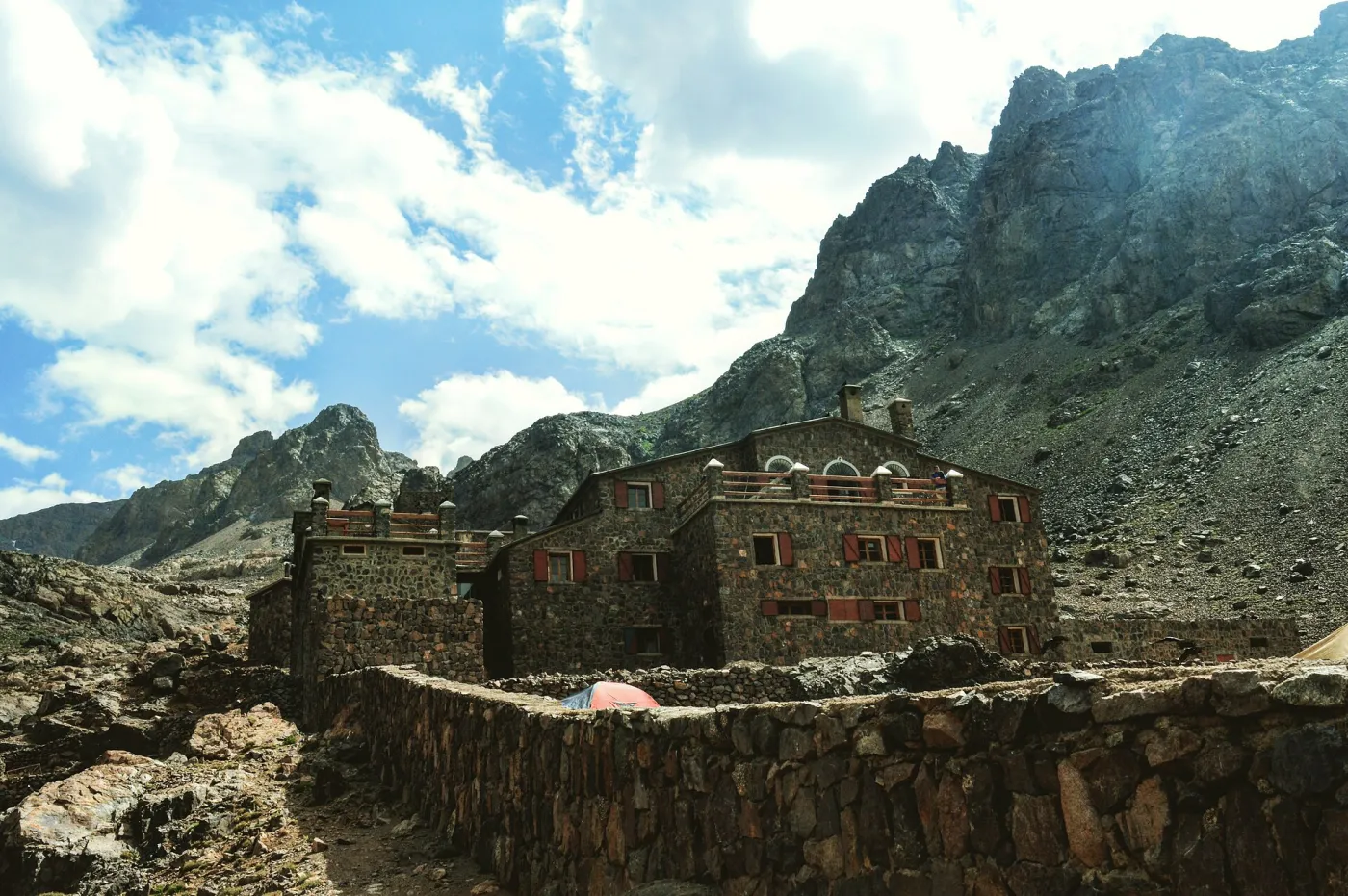
On a guided 2-day trek, mules carry a shared load of luggage from Imlil to the refuge at around 3,200 m. You carry a daypack with what you need during the walk. Summit day starts in darkness and cold, then warms quickly as the sun rises, so layering is everything. Keep your total luggage to a soft duffel or backpack of roughly 8–10 kg. For the route itself and what each day involves, see our step-by-step Toubkal climbing guide.
Footwear
- Hiking boots with ankle support: the single most important item. The upper mountain is loose scree and boulders. Make sure they are broken in; new boots are the main cause of blisters on the 2,400 m descent.
- Hiking socks: two or three pairs of merino or synthetic socks; avoid cotton.
- Light shoes or sandals for the refuge in the evening.
- Gaiters (optional): useful for keeping scree out of boots and essential in snow.
Clothing: The Layering System
| Layer | Item | Why it matters |
|---|---|---|
| Base | Moisture-wicking T-shirt and long-sleeve top | Keeps sweat off your skin on the climb |
| Mid | Fleece or light softshell | Warmth while moving in the cold pre-dawn hours |
| Insulation | Down or synthetic puffy jacket | For breaks, the summit and evenings at the refuge |
| Shell | Waterproof, windproof jacket | Summit winds and occasional storms |
| Legs | Hiking trousers; thermal leggings for summit morning | Temperatures near freezing even in summer |
| Extremities | Warm hat, buff, gloves, sun hat | Heat loss from head and hands; sun at altitude |
Even in July, dawn on the summit can be around freezing with wind chill. In winter, add a heavier insulated jacket, insulated trousers or overtrousers, mittens and a balaclava. How conditions shift through the year is explained in our guide to the best months to climb Toubkal.
Daypack Essentials
- Daypack of 25–35 litres with a hip belt.
- Water: bottles or a hydration bladder for 2–3 litres. You can refill at the refuge; bring purification tablets or a filter bottle if you prefer not to buy bottled water.
- Headlamp with spare batteries: summit day starts in the dark around 4:00–5:00.
- Sun protection: category 3–4 sunglasses, SPF 50 sunscreen and lip balm. UV at 4,000 m is intense, and snow reflection makes it worse.
- Snacks: nuts, dried fruit, energy bars. Dates and almonds can be bought cheaply in Marrakech.
- Trekking poles: reduce strain on knees during the long descent. Poles can be rented in Imlil.
- Small first-aid kit: blister plasters, painkillers, rehydration salts and any personal medication.
- Passport: needed at the checkpoint on the route.
- Cash in dirhams for drinks, showers and tips; there are no card machines on the mountain.
At the Refuge
The refuges provide mattresses and blankets in shared dormitories, but hygiene and warmth vary. We recommend:
- Sleeping bag or liner: a liner is enough in summer if you use the blankets; bring a bag rated to around 0°C for spring and autumn, and lower in winter. Some operators can provide one — ask when booking.
- Earplugs and eye mask: dormitories are shared and early starts are noisy.
- Quick-dry towel and toiletries: hot showers are basic and may cost extra.
- Power bank: charging points are limited and electricity can be intermittent.
- Toilet paper and hand sanitiser.
Winter Gear (November–April)
Snow and ice change the ascent into an alpine climb. Add:
- Crampon-compatible mountaineering boots (B2 or B3)
- Crampons and an ice axe — available to rent in Imlil for a modest daily fee (prices vary; check before you go)
- Helmet for the steeper gullies, when recommended by your guide
- Goggles for wind and spindrift
- Thermos for a hot drink on summit day
What to Leave Behind
- Heavy cotton clothes and jeans — they stay wet and cold.
- Too many changes of clothes; two days need only one spare base layer.
- Valuables and large amounts of cash; leave them at your Marrakech hotel.
- Single-use plastic where possible — waste management is a challenge in the national park.
Renting vs Bringing
If you are travelling in Morocco for longer, carrying bulky mountain gear can be impractical. Imlil has several rental shops for boots, poles, sleeping bags, crampons and ice axes. Quality varies, so bring your own boots if possible — fit matters more than anything else. Items such as fleece, gloves and hats are also sold cheaply in Marrakech if you forgot them.
Packing for Other Atlas Hikes
For day walks in the valleys, the list shrinks to good shoes, a light layer, sun protection, 1.5–2 litres of water and a daypack. Our overview of the top hiking routes in the High Atlas notes when extra gear is needed for longer treks.
Frequently Asked Questions
Do I need a sleeping bag for the Toubkal refuge?
Blankets are provided, but a liner is strongly recommended for hygiene, and a proper sleeping bag is advisable outside midsummer when nights at 3,200 m drop below freezing.
Can I climb Toubkal in trail running shoes?
Some experienced hikers do in summer, but for most people boots with ankle support are safer on the scree and more comfortable on the long descent.
How heavy should my daypack be?
Aim for 5–7 kg including water. Every extra kilo feels heavier above 3,500 m.
Is altitude medication necessary?
Most trekkers acclimatise adequately by sleeping at the refuge and ascending slowly. If you have concerns, consult your doctor before travelling rather than relying on advice on the trail.
Ready to Pack for the Summit?
When you book our Toubkal summit trek over two days — from €150 per person, with free Marrakech hotel pickup, a licensed guide, mules and refuge accommodation — we send a practical kit list for your dates and can help arrange rental gear in Imlil. You can also browse all our Atlas trekking tours or message us on WhatsApp with any gear questions.
Comments