In this guide
- Understanding Toubkal's Climate
- Toubkal Weather Month by Month
- Spring (April–June): Our Favourite Season
- Summer (July–August): Reliable but Busy
- Autumn (September–October): Clear and Quiet
- Winter (November–March): A Mountaineering Ascent
- Other Factors That Affect Your Timing
- Frequently Asked Questions
- If Toubkal Isn't Possible
- Book the Right Dates
The best time to climb Toubkal for most trekkers is late April to June and September to October, when the trail is largely snow-free, days are mild and summit temperatures sit roughly between –2°C and 10°C. July and August are reliable but busier and hot lower down, while November to March brings snow and ice that require crampons, an ice axe and winter experience.
Understanding Toubkal's Climate
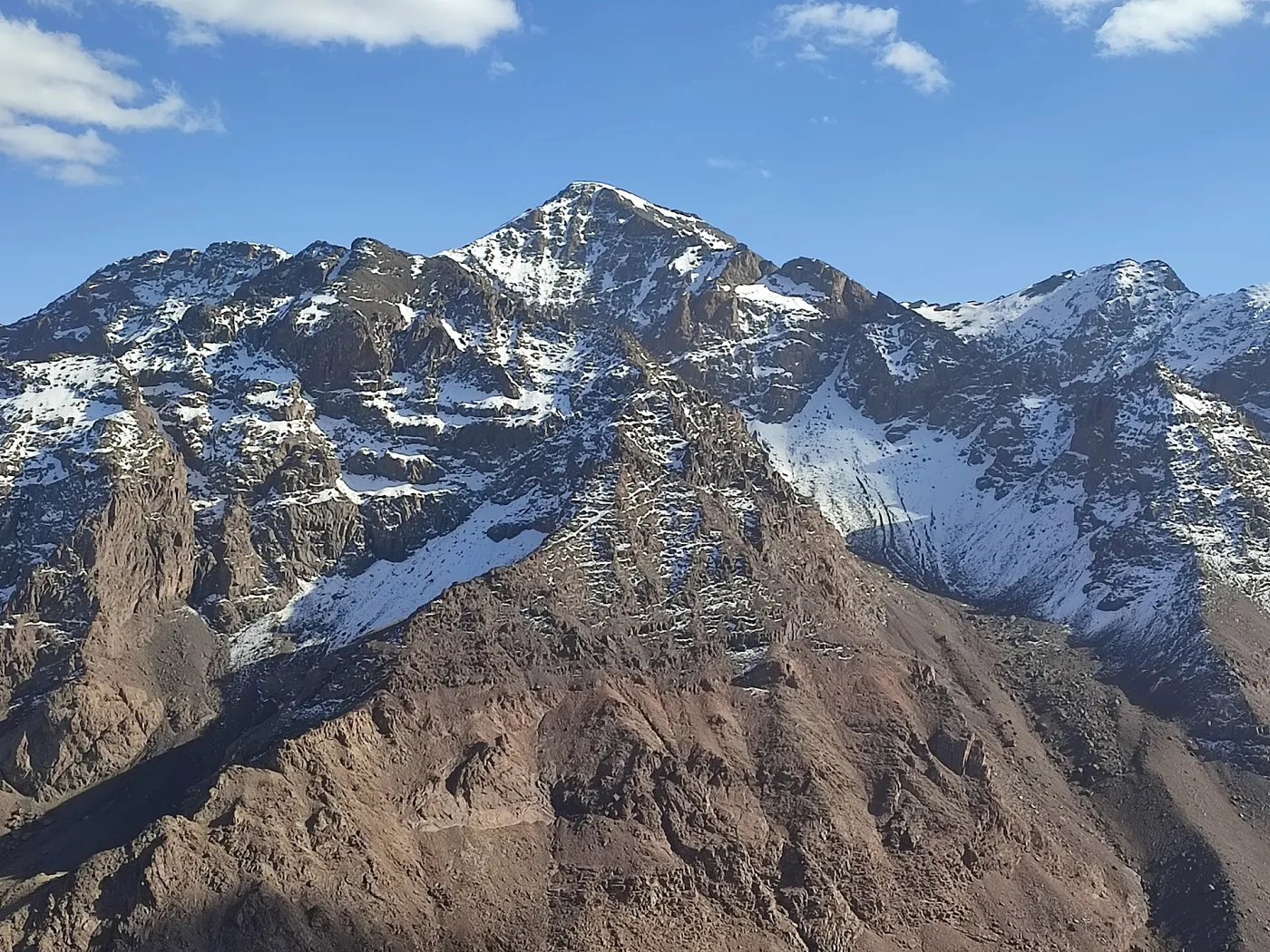
At 4,167 m, Jebel Toubkal has a mountain climate completely different from Marrakech. As a rule, temperature drops about 6–7°C for every 1,000 m of ascent, so a 35°C day in Marrakech (about 470 m) can mean freezing temperatures on the summit at dawn. The range receives most of its precipitation between November and April, falling as snow above roughly 2,500 m. Summers are dry, but afternoon thunderstorms can build over the peaks, especially in July and August. Before choosing dates, it helps to know exactly what the route involves — see our complete guide to the 2-day Toubkal route.
Toubkal Weather Month by Month
The figures below are approximate summit-area temperatures at dawn and midday; actual conditions vary considerably between years.
| Month | Summit temps (approx.) | Conditions | Suitable for |
|---|---|---|---|
| January | –15°C to –5°C | Deep snow, icy gullies, strong winds | Experienced winter mountaineers |
| February | –15°C to –3°C | Peak snow cover, avalanche risk after storms | Winter mountaineers |
| March | –10°C to 0°C | Snow remains, longer days, some milder spells | Winter-equipped trekkers |
| April | –6°C to 5°C | Snow patches above the refuge; conditions variable | Fit trekkers, often with crampons |
| May | –3°C to 8°C | Mostly snow-free by late May; green valleys | Most trekkers |
| June | 0°C to 12°C | Dry, clear, long days | All fit trekkers |
| July | 2°C to 15°C | Warm, busy, occasional afternoon storms | All fit trekkers |
| August | 2°C to 15°C | Similar to July; the busiest month | All fit trekkers |
| September | 0°C to 12°C | Stable, fewer crowds, excellent visibility | All fit trekkers |
| October | –3°C to 8°C | Cooler; first snowfall possible late in the month | Most trekkers |
| November | –8°C to 3°C | Snow arriving, short days | Winter-equipped trekkers |
| December | –12°C to –2°C | Full winter conditions | Experienced winter mountaineers |
Spring (April–June): Our Favourite Season
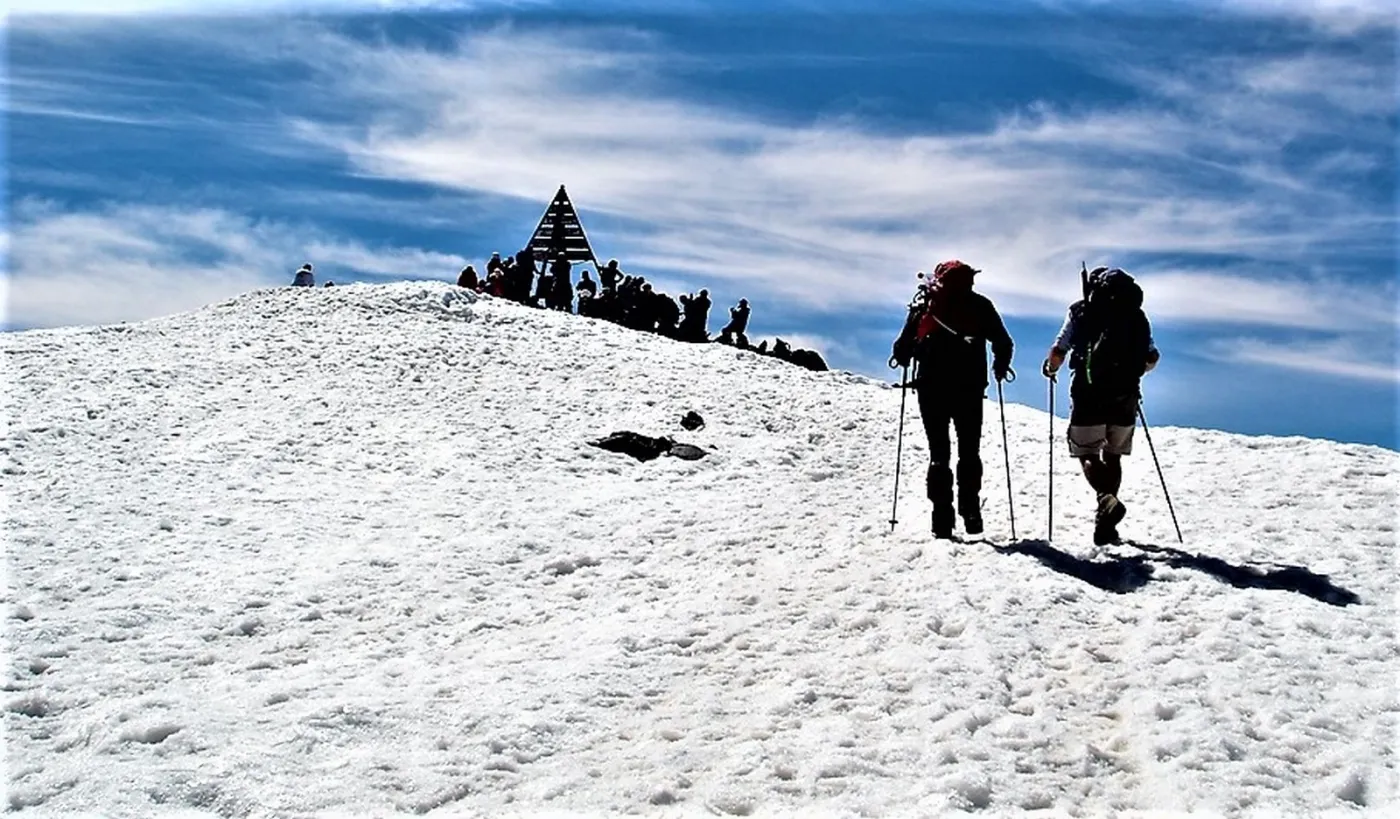
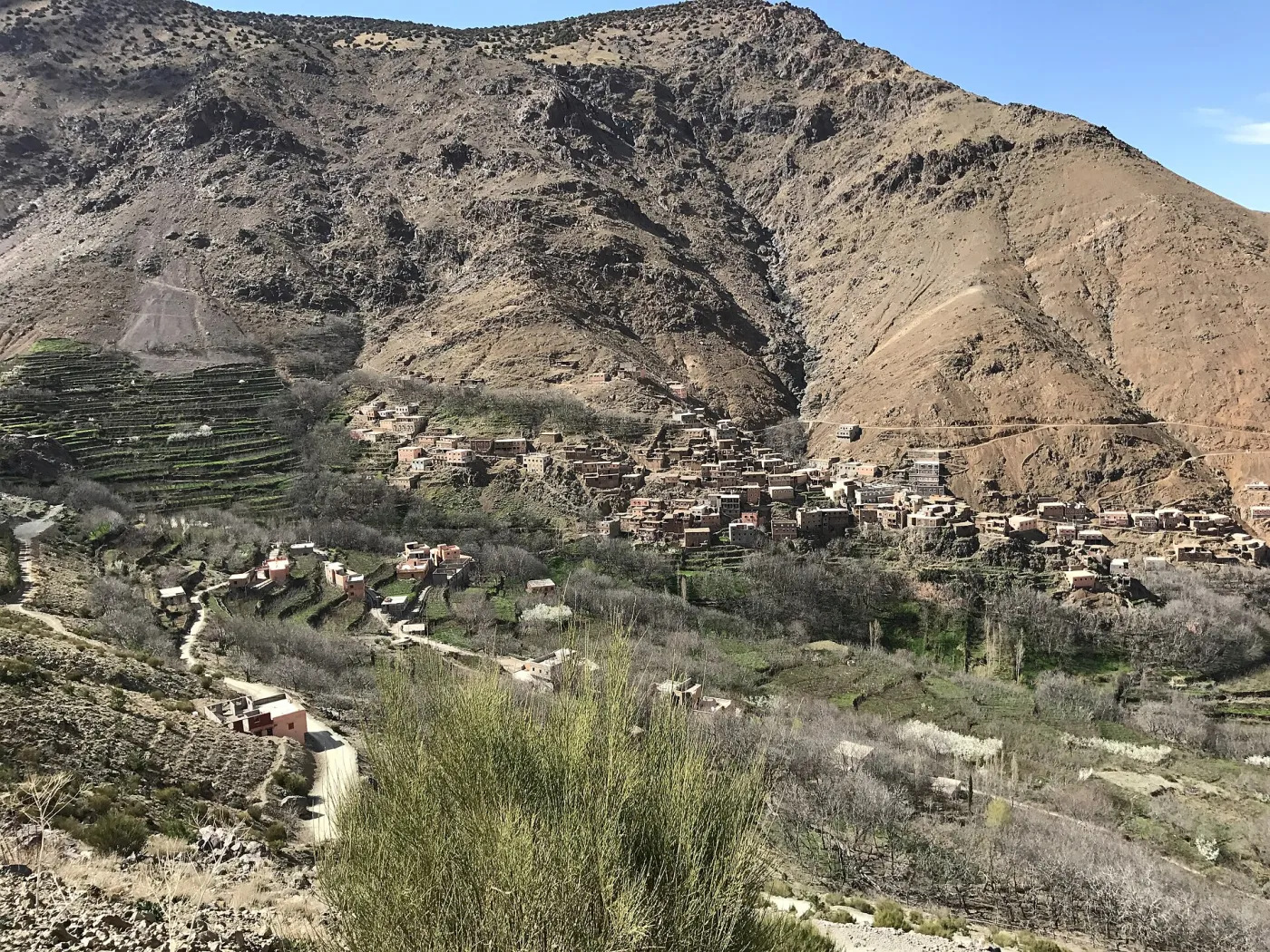
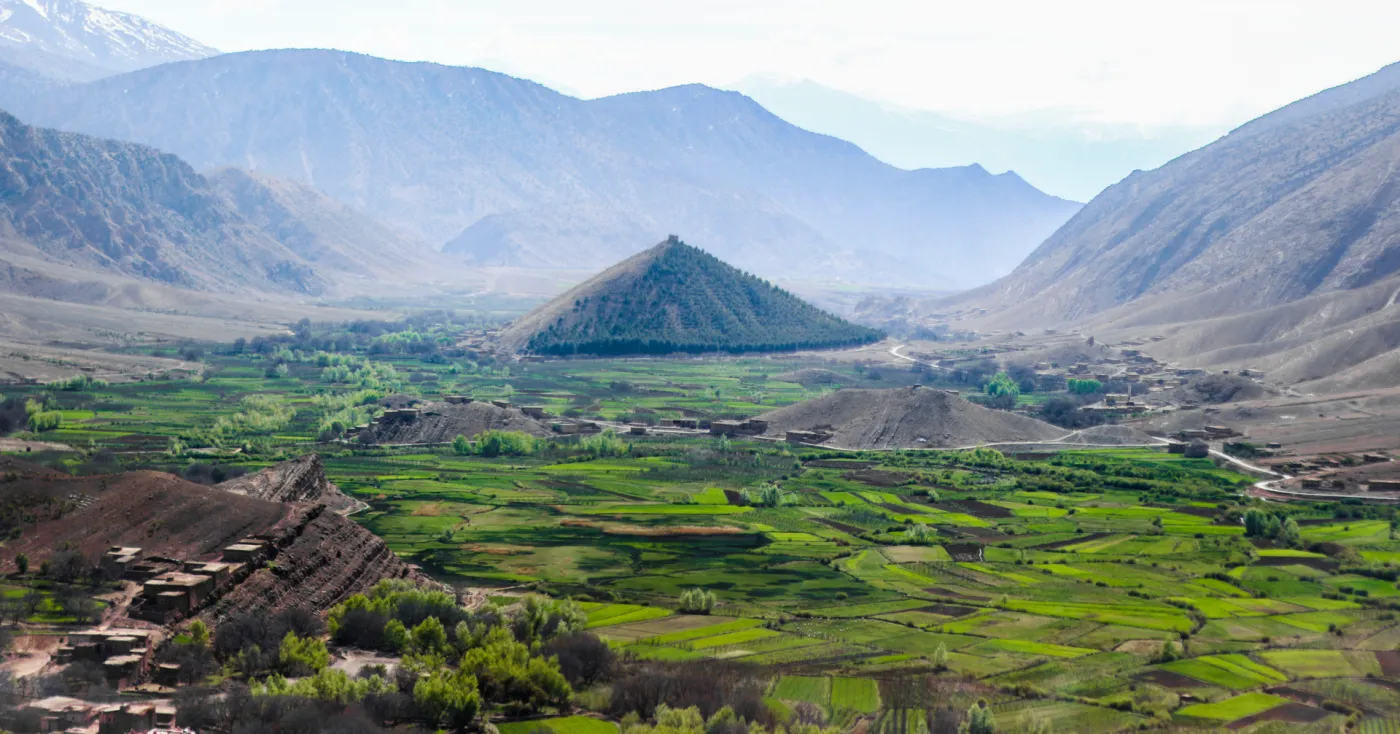
Spring combines lingering snow on the highest ridges — beautiful in photos — with increasingly dry trails. By late May the standard route through the south cirque is usually clear, and June offers the longest days of the year, giving comfortable margins on summit day. The valleys around Imlil are at their greenest, with orchards in blossom in April. The one caveat is April, when late storms can dump fresh snow and crampons may still be necessary.
Summer (July–August): Reliable but Busy
Summer brings the most stable weather and the highest success rate, but also the most climbers and the fullest refuges. The walk up from Imlil can be hot in the afternoon, so start early. At the refuge, nights are still cold — often around 0–5°C — and the summit can be windy. Watch the sky after midday: thunderstorms occasionally form over the High Atlas, which is another reason summit attempts begin before dawn.
Autumn (September–October): Clear and Quiet
Many guides consider September the best single month. The summer crowds leave, the air is clear after the heat haze of August, and temperatures are comfortable for walking. In October the mornings become crisp and the first snow may dust the summit, but conditions are usually still suitable for standard trekking gear.
Winter (November–March): A Mountaineering Ascent
In winter Toubkal becomes a genuine alpine climb. The scree slopes turn into snow and ice gullies, and a fall can be serious. You will need:
- Mountaineering boots compatible with crampons
- Crampons and an ice axe (both can be rented in Imlil)
- Insulated jacket, windproof shell, warm gloves and balaclava
- A guide experienced in winter conditions
Days are short, so the summit window is tighter, and heavy storms can close the route for days. The reward is a spectacular, quiet mountain with far fewer people. Allow a flexible extra day in case of bad weather. Our Toubkal packing list includes a dedicated winter section.
Other Factors That Affect Your Timing
Ramadan
Treks run normally during Ramadan, and guides and cooks are used to working while fasting. Villages are quieter during the day and lively after sunset.
Public holidays and weekends
Moroccan holidays and summer weekends bring local hikers to the mountain, so refuges fill quickly. Booking a few weeks ahead is wise for July, August and holiday periods.
Combining with other trips
If you are also visiting the desert, remember that Sahara temperatures peak in summer. Many travellers pair a spring or autumn Toubkal climb with a desert tour for the best of both.
Frequently Asked Questions
Is Toubkal open all year?
Yes. The route and refuges operate year-round, but from roughly November to April the ascent requires winter equipment, and storms can temporarily close the trail.
What is the single best month?
For most first-time trekkers, June and September offer the best combination of stable weather, snow-free trail and manageable crowds.
Can beginners climb Toubkal in winter?
Fit beginners can attempt a winter ascent with an experienced guide who teaches basic crampon and ice axe technique, but the risk and difficulty are significantly higher, and turning back is more common. We recommend a summer or shoulder-season ascent for a first high-altitude climb.
How early should I book?
For July, August and Moroccan holiday periods, book two to four weeks in advance so guides and refuge beds can be secured. At other times a few days' notice is often enough.
What happens if the weather is bad on summit day?
Your guide decides on the morning whether it is safe to continue. If not, the group waits at the refuge for a window or descends; having a spare day in your itinerary improves your chances of reaching the top.
If Toubkal Isn't Possible
When the summit is off the table — whether due to winter conditions, limited time or fitness — the lower valleys remain beautiful year-round. Our selection of the best High Atlas hikes includes walks at every level, and the Imlil village guide explains what to do at the foot of the mountain.
Book the Right Dates
Our 2-day Toubkal summit trek runs from spring to autumn, and in winter on request with suitable conditions and equipment. It starts from €150 per person, with free hotel or riad pickup in Marrakech, a licensed mountain guide, mules and refuge accommodation. Browse all our Atlas Mountains treks, or message us on WhatsApp for current conditions before you book.
Comments