In this guide
The classic Mount Toubkal trek takes two days from Imlil (1,740 m): about 5–6 hours of hiking to the Toubkal Refuge (around 3,207 m) on day one, then a pre-dawn 3–4 hour climb to the 4,167 m summit and a long 6–8 hour descent back to Imlil on day two. It is a non-technical but strenuous hike, and since 2018 trekkers must be accompanied by a licensed mountain guide.
Mount Toubkal at a Glance
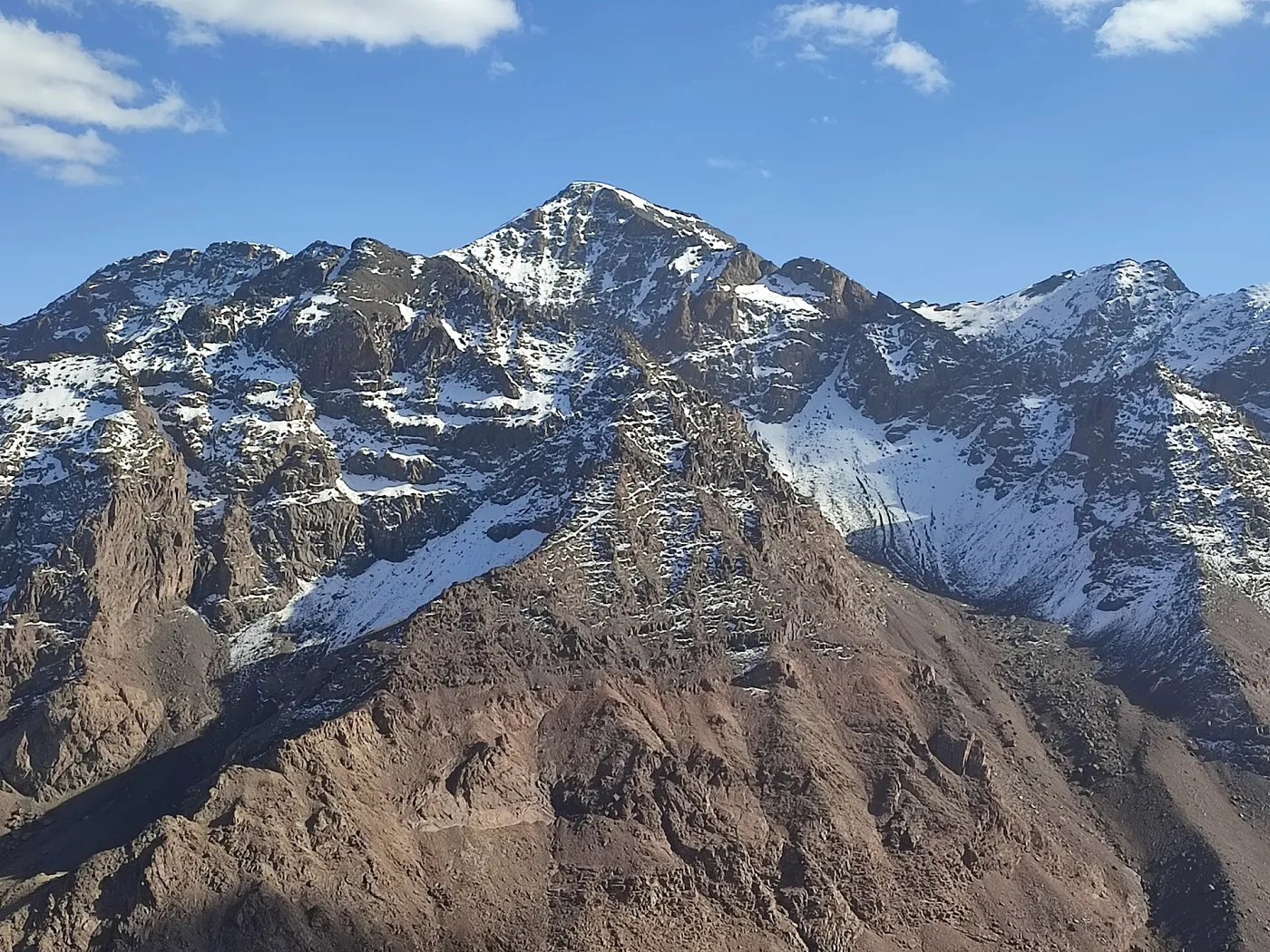
Jebel Toubkal is the highest peak in North Africa and the Arab world, standing at 4,167 m in the heart of Toubkal National Park, roughly 65 km south of Marrakech. The standard route climbs the south cirque from the refuge, and in summer it involves no ropes or climbing skills — just endurance and altitude tolerance. Winter is a different proposition, covered in our guide to the best season and month-by-month conditions on Toubkal.
| Key fact | Detail |
|---|---|
| Summit altitude | 4,167 m |
| Trailhead | Imlil village, 1,740 m (approx. 1 h 30 drive from Marrakech) |
| Overnight | Toubkal Refuge area (Refuge du Toubkal / Les Mouflons), approx. 3,200 m |
| Total elevation gain | About 2,430 m up and down over two days |
| Total distance | Roughly 22–25 km round trip (approximate) |
| Guide | Licensed guide required beyond the Imlil/Aroumd area checkpoint |
The 2-Day Route, Step by Step
Day 1: Imlil to the Toubkal Refuge (approx. 10–11 km, 5–6 hours)
After a morning transfer from Marrakech through Asni, you start walking from Imlil past walnut and apple orchards to the village of Aroumd (about 1,900 m). The trail then crosses the wide flood plain of the Mizane valley and climbs steadily to the shrine of Sidi Chamharouch (around 2,350 m), a pilgrimage site with cafés selling mint tea, fresh orange juice and omelettes. From here the path zig-zags up the eastern side of the valley, gaining roughly 850 m to reach the refuges. Mules carry the heavy luggage, so you walk with a daypack.
Most groups arrive mid-afternoon, which leaves time to rest, hydrate and acclimatise. Dinner is typically soup, tajine and bread; lights go out early.
Day 2: Summit and Descent (approx. 12–14 km, 9–11 hours total)
Wake-up is usually between 4:00 and 5:00. The route crosses the stream behind the refuge and climbs the south cirque over loose scree and boulder fields to the ridge at Tizi n'Toubkal (around 3,940 m), then follows the ridge to the triangular metal summit marker. Expect 3–4 hours up. On a clear morning you see the Anti-Atlas to the south and, on exceptional days, the edge of the Sahara.
After photos you descend to the refuge (about 2 hours) for a late breakfast, then continue the 4–5 hour walk back down to Imlil for the transfer to Marrakech, arriving in the early evening.
Do You Need a Guide for Toubkal?
Yes. Since 2018 the Moroccan authorities require foreign trekkers heading to the summit to hike with a licensed mountain guide. A checkpoint near the start of the route verifies passports and guide credentials, and independent hikers are turned back. Beyond the rules, a guide handles refuge bookings, mule logistics, weather judgement and the route through the scree in poor visibility — the part of the mountain where most navigation errors happen.
How Difficult Is the Toubkal Trek?
We grade the summer ascent as moderate to challenging. There is no technical climbing, but three factors make it hard:
- Altitude: many hikers feel headaches or breathlessness above 3,500 m. Walking slowly, drinking 3–4 litres a day and sleeping at the refuge are the best preventions.
- Terrain: the upper mountain is loose scree, which is tiring on the way up and hard on knees on the way down. Trekking poles help a great deal.
- Long day two: summit day combines roughly 960 m of ascent and 2,430 m of descent.
If you can walk 6–7 hours with a daypack on consecutive days, you can realistically summit. Training for a few weeks with hill walks or stair sessions makes the experience far more enjoyable.
Where You Sleep: The Toubkal Refuges
Two stone refuges sit side by side at roughly 3,200 m: the Refuge du Toubkal (run by the French Alpine Club) and the privately run Refuge Les Mouflons. Both offer shared dormitories with mattresses and blankets, basic hot showers (often for a small extra charge), and a dining room. Dormitory beds with half board generally cost somewhere in the region of €30–50 per night, approximate and varying by season. Nights are cold even in July and August — temperatures can drop to around 0–5°C — so a warm layer for the evening is essential. What to bring is detailed in our Toubkal gear checklist.
Costs: What a 2-Day Trek Typically Includes
Prices depend on group size and whether you go private or join a small group. A well-organised trek normally covers:
- Return transfer Marrakech–Imlil (about 65 km each way)
- A licensed mountain guide for both days
- Mules and a muleteer for luggage
- One night at the refuge with dinner and breakfast, plus lunches on the trail
Not usually included: tips for the guide and muleteer, drinks, showers at the refuge, and personal gear rental such as crampons in winter.
Practical Tips from the Trail
- Carry cash in dirhams: there are no card machines at Sidi Chamharouch or the refuges, and the nearest ATM is in Asni.
- Start early on day one: arriving at the refuge by 3–4 pm leaves time to acclimatise.
- Break in your boots: blisters on the descent are the most common reason for a miserable day two.
- Protect against sun: UV at 4,000 m is intense even when the air is cold.
- Add a buffer day: spending a night in Imlil before the trek helps with acclimatisation and gives flexibility if the weather turns.
If you would like a gentler introduction first, a day in the valleys below — explored in our guide to Imlil and its Berber villages — is an ideal warm-up.
Frequently Asked Questions
Can Toubkal be climbed in one day?
Very fit, acclimatised hikers sometimes do it in a single 12–14 hour push from Imlil, but it is not recommended: you gain over 2,400 m without sleeping at altitude, which sharply increases the risk of altitude sickness.
Is Toubkal suitable for beginners?
Fit beginners with no mountaineering background summit every week between May and October. The key is steady pacing rather than technical skill.
What is the minimum age?
There is no official minimum, but we generally suggest teenagers of 14+ with hiking experience, and a pre-trek chat to assess fitness.
Planning Your Summit
If you want the route, the refuge, the mules and the guide organised in one package, our Mount Toubkal 2-day summit trek from Imlil starts from €150 per person, with free hotel or riad pickup in Marrakech and a choice of private or small-group departures led by licensed local guides. You can compare it with shorter hikes on our Atlas Mountains trekking tours page, or message us on WhatsApp to tailor the dates and pace to your group.
Comments