In this guide
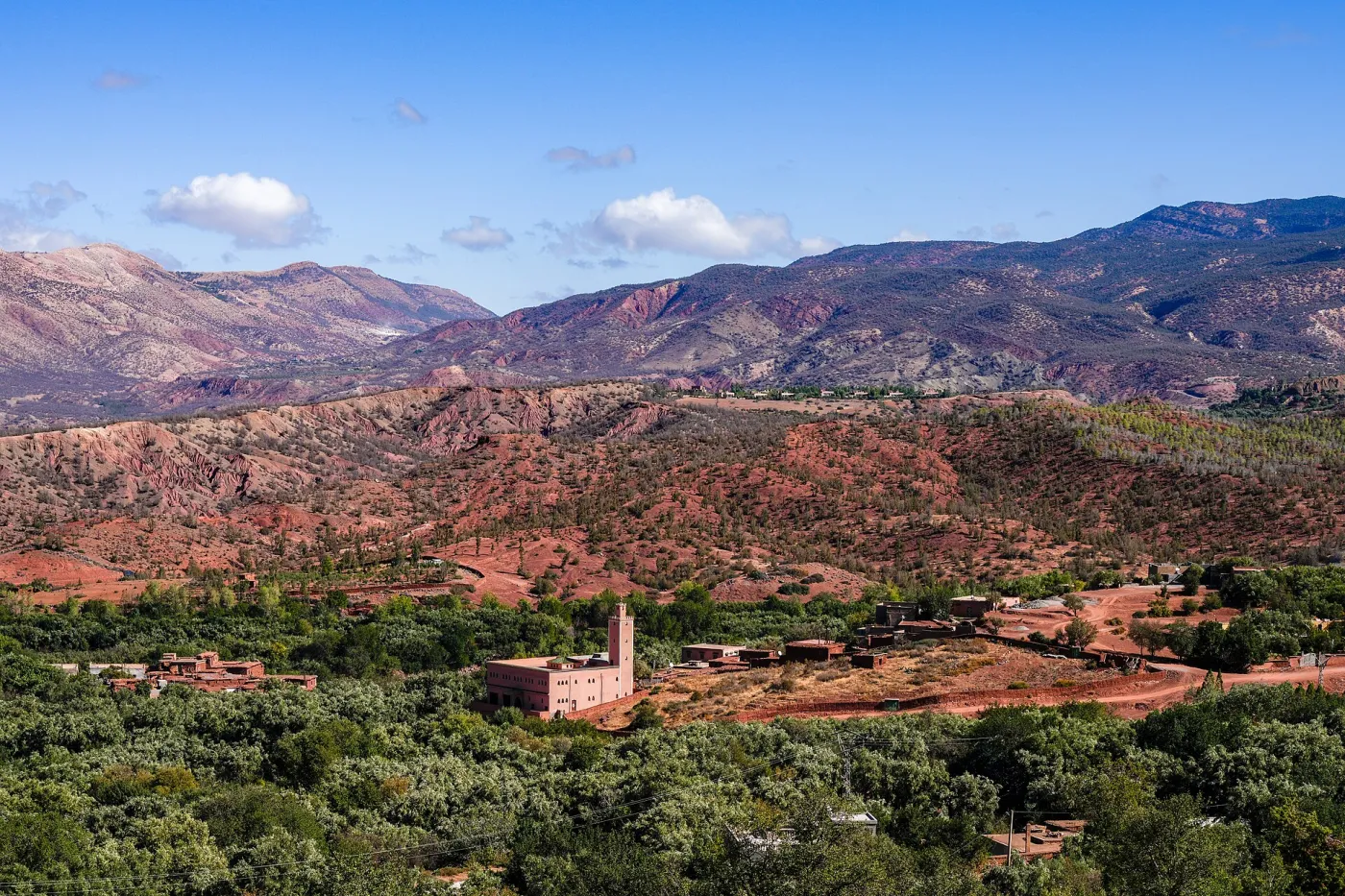
Ouirgane is a green valley at about 1,000 m in the High Atlas foothills, roughly 60 km (about 1 h 15) south of Marrakech on the road to the Tizi n'Test pass. Known for pine and juniper forest, a turquoise reservoir and small Berber hamlets, it is a quieter alternative to Imlil for gentle walks, horse riding and relaxing in countryside lodges.
Where Is Ouirgane?
Ouirgane lies west of Asni on the R203, the historic road that crosses the High Atlas via the Tizi n'Test pass (about 2,100 m) towards Taroudant. The valley sits on the western edge of Toubkal National Park, where the Nfis river has been dammed to create the Yacoub El Mansour reservoir. Red-earth hills, dense forest and olive and almond groves give it a softer landscape than the high, rocky valleys around Imlil.
Like much of the Al Haouz province, Ouirgane was affected by the 2023 earthquake, and some villages and lodges have been rebuilt or renovated since. Tourism is an important source of income in the valley's recovery.
Getting to Ouirgane from Marrakech
| Route | Distance | Approx. time |
|---|---|---|
| Marrakech – Tahanaout – Asni – Ouirgane (R203) | About 60 km | 1 h 15 |
| Ouirgane – Imlil (via Asni) | About 30 km | 45 min–1 h |
| Ouirgane – Tinmel Mosque | About 40 km | 1 h |
| Ouirgane – Tizi n'Test pass | About 75 km | 2 h |
Times are approximate; the road after Asni is narrow and winding, and sections beyond Ouirgane have seen reconstruction work since 2023.
Things to Do in Ouirgane
Walk around the reservoir
Trails follow the shores and ridges around the lake, passing through forest and farmland with changing views of the water. A half-day circuit of 2–4 hours suits most walkers and involves only modest climbs.
Forest hikes to Berber hamlets
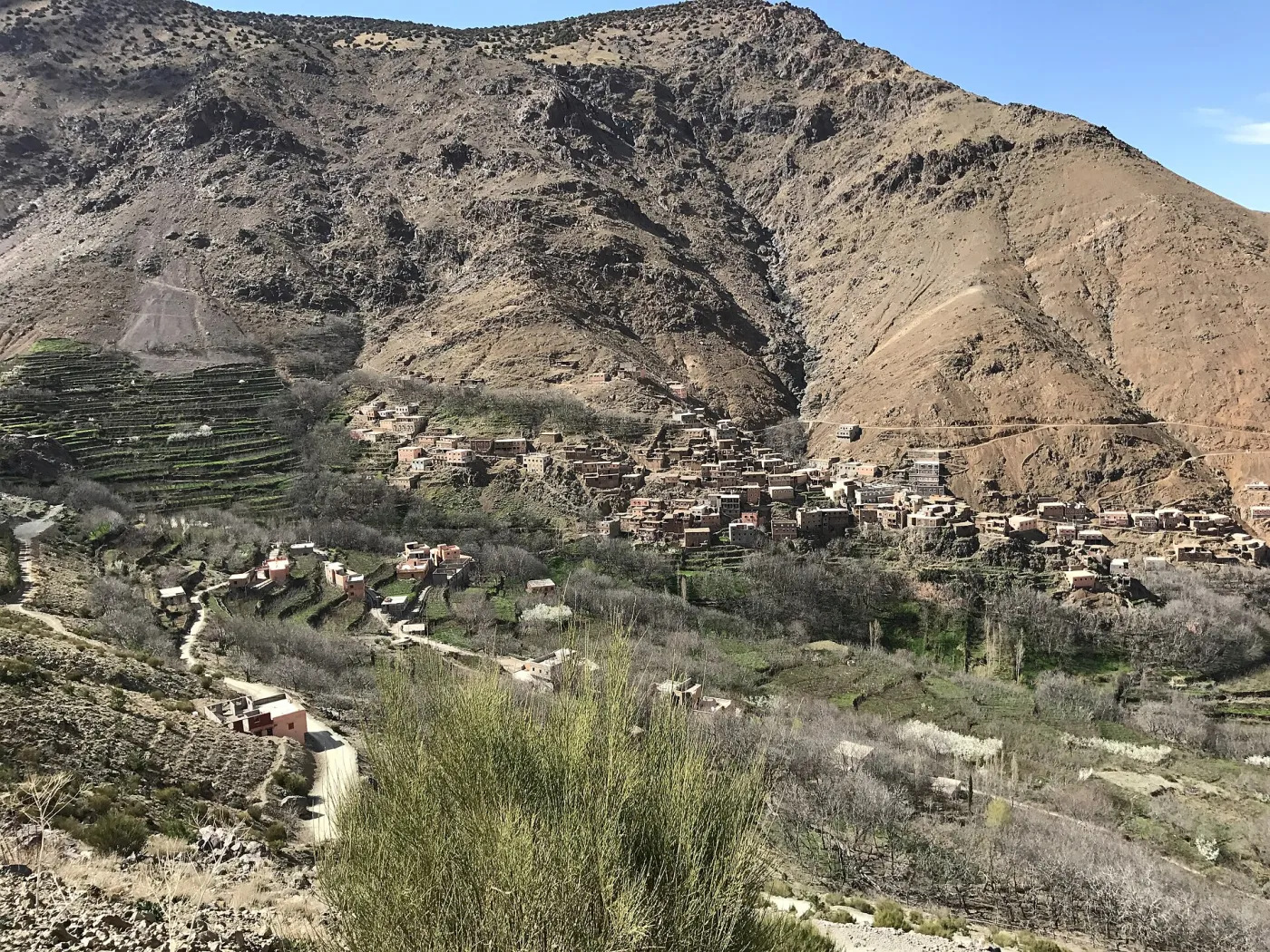
Longer walks climb into juniper and holm oak forest to villages such as those on the slopes above the Nfis, where life revolves around terraced plots, beehives and goats. These hikes of 4–6 hours are quieter than the paths near Imlil and offer a close look at rural life. Our article on Amazigh customs and village traditions explains what you will see.
Horse riding and mountain biking
Several lodges and local operators offer horse rides and mountain bike routes along forest tracks, suitable for beginners and families.
Salt mines and local products
Near the valley, small traditional salt workings where brine is evaporated in pans have long been part of the local economy. You will also find honey, olive oil and argan-based products sold by cooperatives.
Tinmel Mosque
Further along the Tizi n'Test road stands the 12th-century Almohad mosque of Tinmel, one of the few historic mosques in Morocco non-Muslims were traditionally allowed to visit. It was heavily damaged in 2023 and has been undergoing major restoration, so check its status before planning a detour.
Where to Stay
Ouirgane is known for countryside accommodation rather than village gîtes:
- Eco-lodges and guesthouses with gardens and pools, often around €50–120 per room with breakfast (approximate).
- Upscale country hotels and domaines with spas, horse riding and restaurants, at higher prices.
- Family-run auberges for simpler, cheaper stays.
A night or two here is ideal as a pause between Marrakech and a longer trip, or as a relaxing base for a couple of day walks.
Food in the Valley
Lodges serve Moroccan classics — tagines, couscous, harira — often made with produce from their own gardens. Local specialities include honey from forest hives, olive oil pressed in the valley and fresh trout in some restaurants. Many visitors stop for lunch by the reservoir on day trips.
When to Visit Ouirgane
- March–May: almond and fruit blossom, green hills and full rivers; ideal for walking.
- June–September: warm (often 28–35°C at midday) but cooler than Marrakech, with pleasant evenings and swimming pools at lodges.
- October–November: clear light, olive harvest and comfortable walking temperatures.
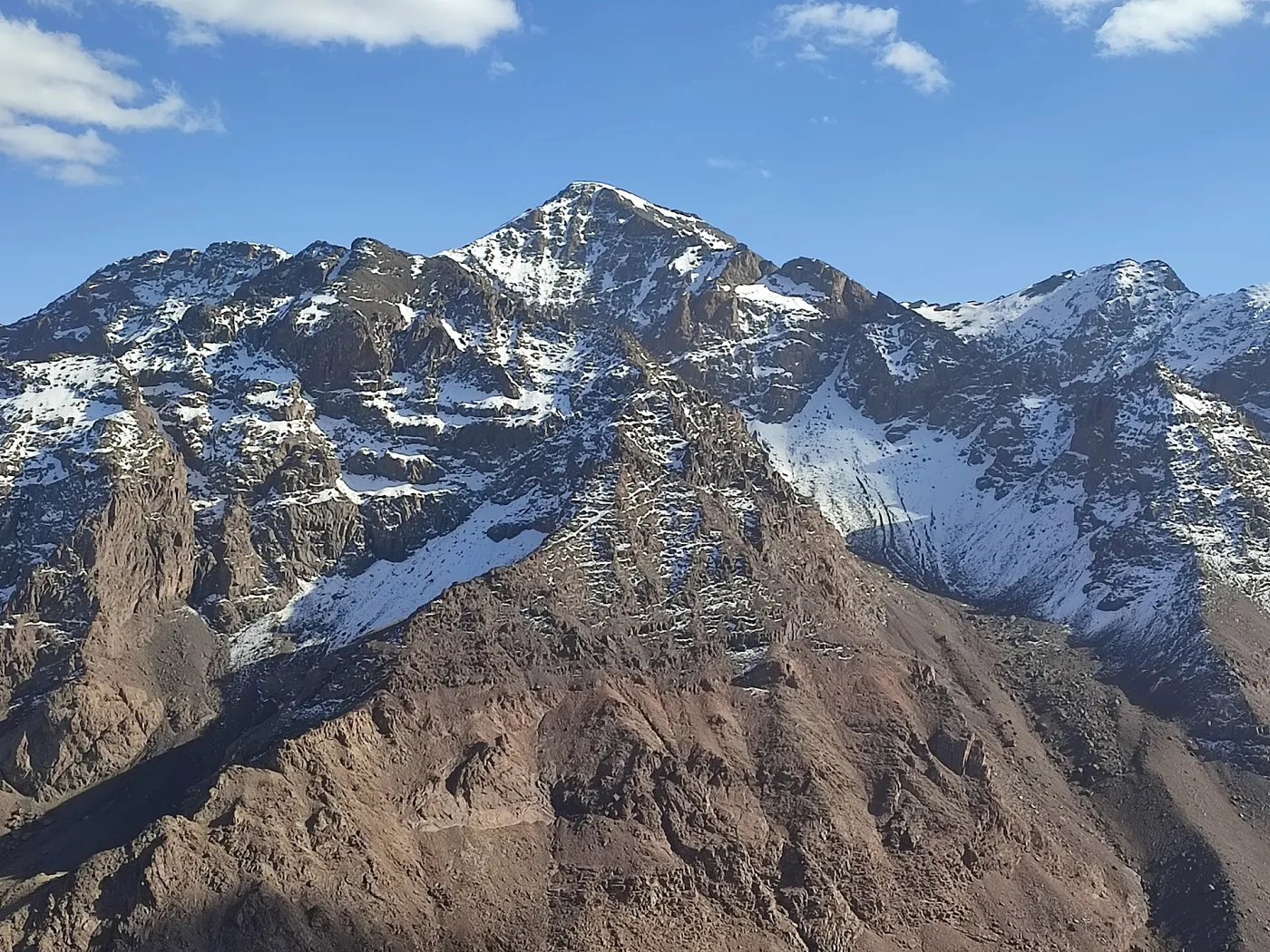
- December–February: cool, sunny days and cold nights; snow on the high peaks makes a striking backdrop.
Ouirgane vs Imlil: Which Should You Choose?
Ouirgane is lower, greener and calmer; Imlil is higher, rockier and more focused on serious hiking and the Toubkal summit. If you want gentle walks, horses and a lodge with a pool, choose Ouirgane. If you want to feel the high mountains, choose Imlil — our Imlil village guide explains its walks and stays. For a full comparison of all the valleys within reach, read our guide to visiting the Atlas Mountains from Marrakech.
Practical Tips
- Bring cash; card acceptance is limited outside larger hotels.
- Wear walking shoes with grip; forest tracks can be dusty or muddy.
- Carry water and a hat; there is little shade on some ridge paths.
- Use a local guide for longer hikes, as paths are not marked.
A Sample One-Day Ouirgane Itinerary
- 8:30: leave Marrakech, with a coffee stop in Asni (on Saturdays, a walk through the weekly souk).
- 10:00–13:00: guided forest walk above the reservoir, passing a hamlet and its terraced fields.
- 13:00–14:30: lunch on a lodge terrace or by the water.
- 14:30–16:00: short lakeside stroll or horse ride.
- 16:00–17:30: drive back to Marrakech.
Frequently Asked Questions
Can you swim in the Ouirgane reservoir?
Swimming in the reservoir is generally not advisable because of variable water levels and the lack of supervised areas; lodges with pools are the better option in summer.
Is Ouirgane good for families?
Yes. The low altitude, easy trails, horses and lodge gardens make it one of the most family-friendly corners of the Atlas.
Can I reach Toubkal from Ouirgane?
Not directly on foot in a day, but Imlil, the Toubkal trailhead, is under an hour's drive away, so Ouirgane works well as a relaxing base before or after a summit trek.
Combine Ouirgane with an Atlas Hike
Ouirgane and Imlil sit only about 30 km apart, which makes it easy to pair a quiet night in the valley with a guided walk. Our High Atlas villages day hike starts from €45 per person with free Marrakech pickup, and private versions can be adjusted to include a stop in Ouirgane. See all our trekking tours in the Atlas Mountains, or contact us on WhatsApp to plan a customised itinerary.
Comments