In this guide
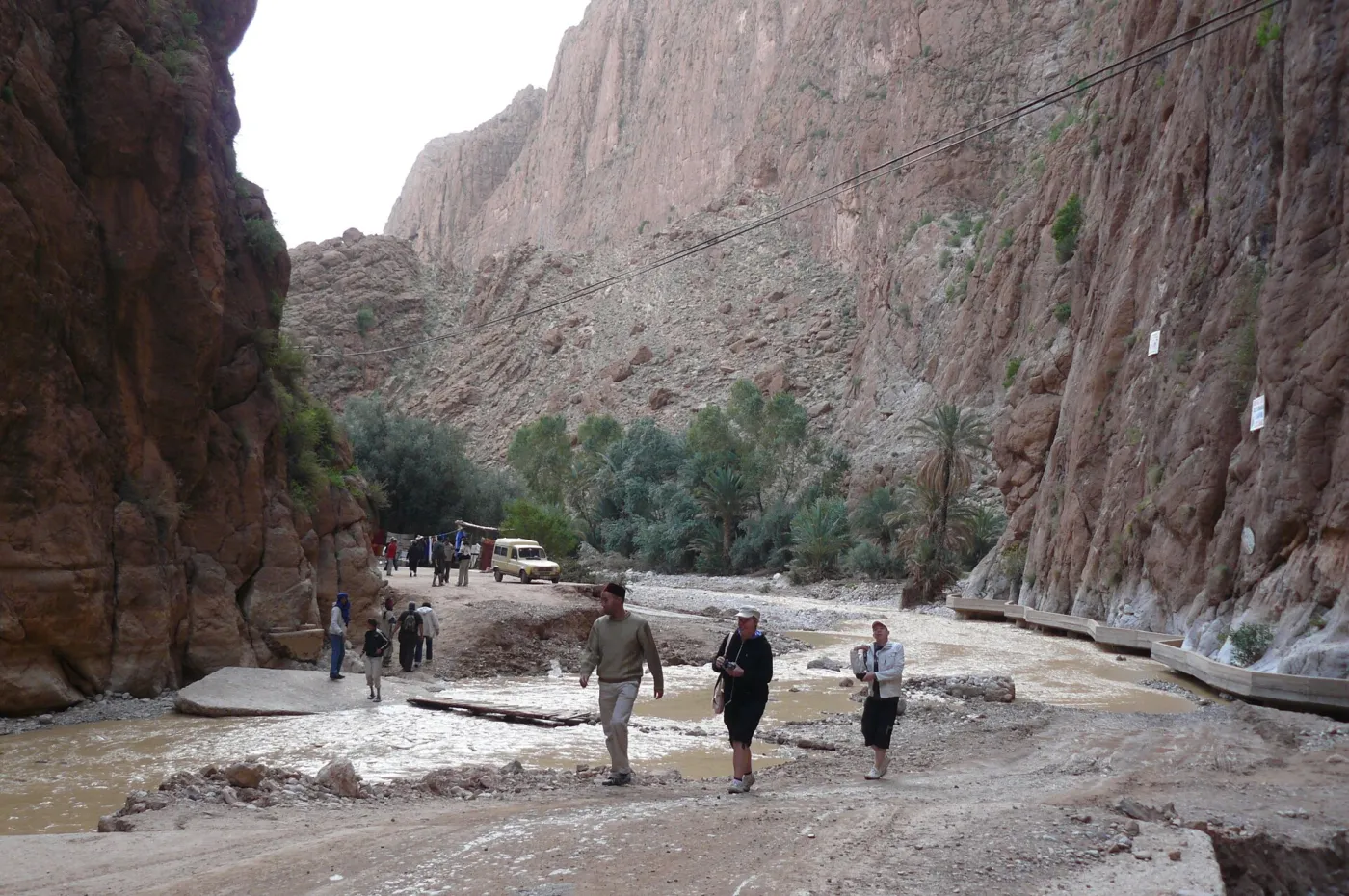
The Dades Valley and Todra Gorge lie on the main road from Marrakech to Merzouga, around 5–7 hours' drive from Marrakech. Dades is known for its switchback road near Tissadrine, red "monkey fingers" rock formations and kasbah hotels; Todra, about 15 km north of Tinghir, is a limestone canyon whose walls rise to roughly 160 m over a passage only about 10 m wide. Both are free to visit and are usually seen on the morning of Day 2 of a Merzouga tour.
Where they are and how they connect
After crossing the High Atlas and passing Ouarzazate, the N10 runs east along a corridor between the High Atlas to the north and the Jbel Saghro massif to the south. This is the so-called road of a thousand kasbahs. The Dades River flows down from the north at Boumalne Dades; about 50 km further east, the Todra River emerges from its canyon above Tinghir. Both gorges are side trips north of the main road.
| Stretch | Approx. distance | Approx. drive |
|---|---|---|
| Marrakech – Ouarzazate | 200 km | 4 h |
| Ouarzazate – Kelaat M'Gouna – Boumalne Dades | 115 km | 1 h 45 min |
| Boumalne – Dades switchbacks (Tissadrine) | about 25 km | 35–45 min |
| Boumalne – Tinghir | 50 km | 50 min |
| Tinghir – Todra Gorge narrows | 15 km | 20 min |
| Tinghir – Merzouga | 190 km | 3 h |
Distances are approximate. The full outbound route is laid out in our 3-day Marrakech to Merzouga itinerary.
Highlights of the Dades Valley
The Rose Valley
Before Boumalne, Kelaat M'Gouna is the centre of Morocco's Damask rose industry. Petals are harvested at dawn in late April and May, and the rose festival is held in May. Cooperatives sell rose water, oil and soap; ask for products with a clear ingredient list.
Monkey fingers and the gorge road
North of Boumalne, the road R704 follows the river through the Dades Gorge. Around 15 km in, eroded red-brown formations known as "monkey fingers" or the "brain rocks" line the valley. Further on, near Tissadrine, the road climbs in tight hairpin bends to a café viewpoint; the view down onto these switchbacks is one of the most photographed in Morocco.
Kasbahs and villages
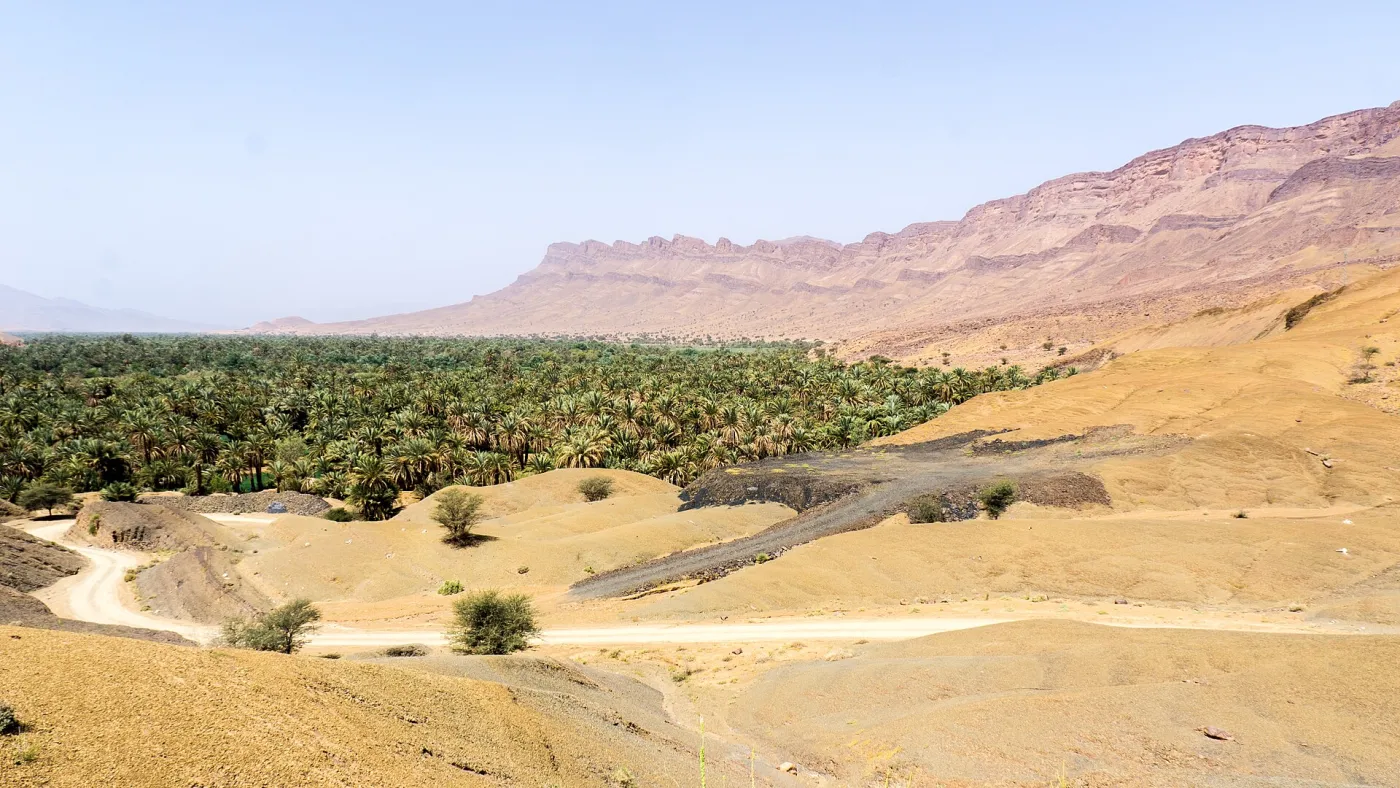
Earthen ksour such as Aït Youl and Aït Arbi sit above irrigated fields of wheat, almond and fig. Many old kasbahs are now guesthouses, which makes the Dades Valley the usual overnight stop on the way to the desert, at an altitude of roughly 1,500–1,700 m. Evenings are cool even in summer.
Highlights of Todra Gorge
The narrows
The most dramatic section is the last 600 m or so before the gorge opens up, where vertical limestone walls of up to about 160 m enclose the river and a road. You can walk through in 20–30 minutes, paddling in the shallow stream if you wish. Visiting is free; parking attendants may ask a few dirhams. Arrive before about 10:30 for fewer groups and before the sun leaves the walls in shadow.
Rock climbing
Todra has several hundred bolted routes, from roughly grade 5 to 8, and is Morocco's best-known climbing crag. Local climbing guides and gear hire are available in the gorge.
The Tinghir palm grove
Between the gorge and Tinghir, a ribbon of palm groves and gardens follows the river for several kilometres. A guided walk through the plots, irrigated by traditional channels, gives a close look at oasis agriculture, and the old mellah (Jewish quarter) of Tinghir can be visited with a local guide.
Easy hikes
- Todra loop: a 2–3 hour circuit climbing from the narrows onto the plateau and back via a nomad path, with views over the canyon. Take a local guide; paths are not signed.
- Dades gorge walk: 1–2 hours along the river from Aït Oudinar through a narrow side canyon.
- Palm grove walk: 1 hour on flat paths through the Tinghir oasis.
Wear closed shoes and carry water. In spring, the rivers can rise after rain in the High Atlas.
How much time do you need?
On a 3-day tour you typically spend the evening and early morning in Dades and about an hour at Todra. On a 4-day route or private tour, you can add a Todra hike or climbing session and a longer Dades drive. Travellers who love landscapes often say the gorges are as memorable as the desert itself.
When to visit
Spring and autumn are ideal for walking. In winter, nights in the Dades Valley can be close to freezing and the upper gorge road occasionally sees snow. In summer, the gorges stay cooler than the plains, but the drive onward to the desert is hot. Our guide to the best time for a Sahara trip explains how the seasons affect the whole route, and our article on the Tizi n'Tichka pass covers the first part of the journey.
Where to stay
Accommodation in the area falls into three groups. Gorge-side guesthouses in the Dades Gorge, between about 15 and 30 km north of Boumalne, have terraces over the river and the switchback road. Restored kasbah hotels along the valley floor combine traditional architecture with swimming pools, open in the warmer months. Hotels close to the Todra narrows are the best base if you plan to climb or hike early in the morning. On most organised tours, the overnight is in the Dades Gorge because it breaks the drive to Merzouga into two balanced halves.
Food and local products
- Tagine and berber omelette: the standard lunch at roadside restaurants in Tinghir and Boumalne.
- Medfouna: a stuffed flatbread often called "Berber pizza", more common towards Rissani and Merzouga.
- Rose products: rose water and creams from Kelaat M'Gouna cooperatives.
- Carpets: Tinghir and the Todra area have weaving cooperatives; take your time and compare before buying.
Visiting on a desert tour
Our 4-day Marrakech to Fes desert tour via Merzouga, from €240 per person, includes an overnight in the Dades Valley, a stop at Todra Gorge, a camp night in the Erg Chebbi dunes and onward travel to Fes, with free Marrakech pickup and licensed drivers. Private departures let you add a Todra hike or more time in the gorges. See all options on our Sahara desert tours page, and read our Erg Chebbi guide for what comes next.
Comments