In this guide
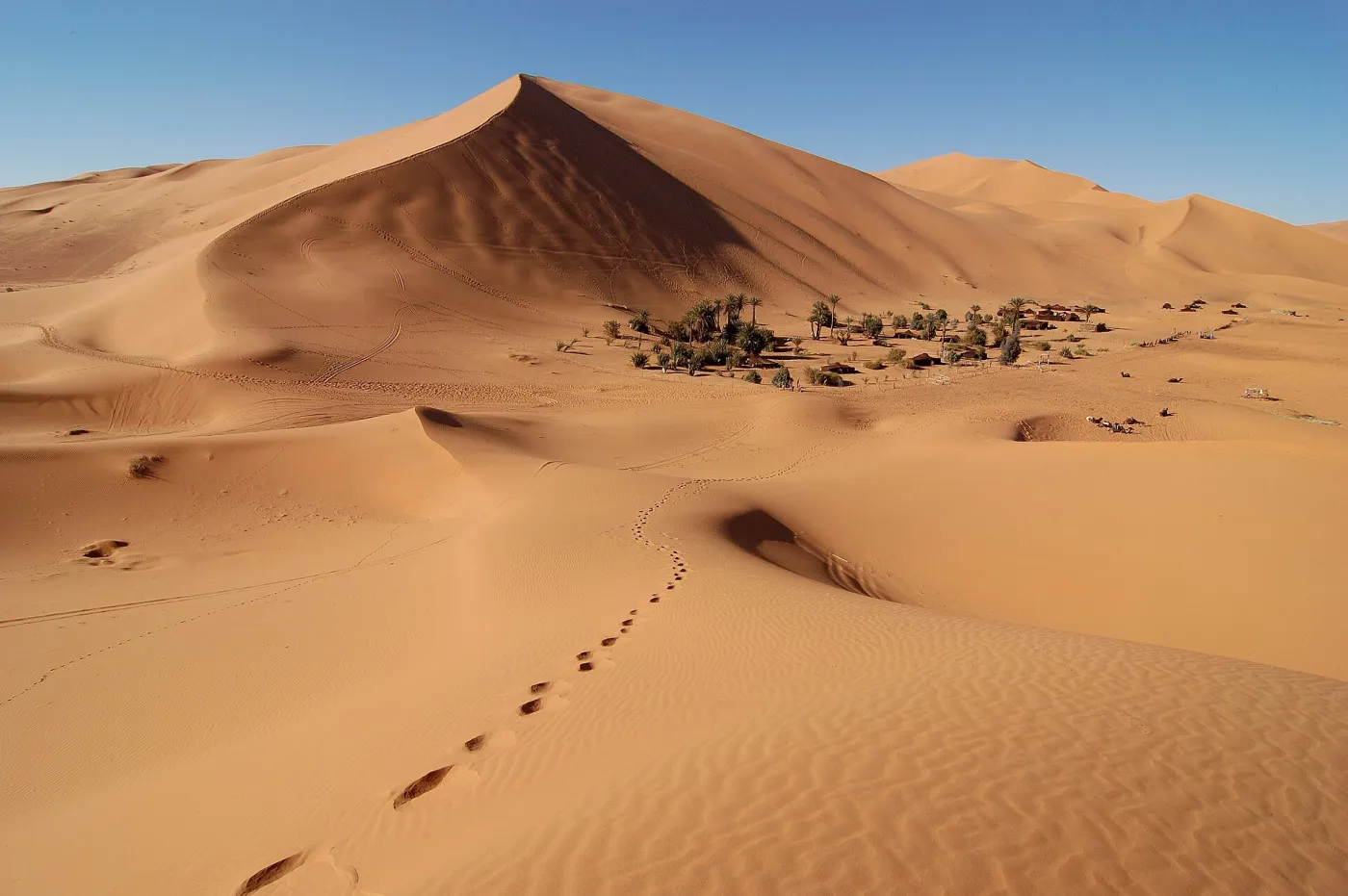
Erg Chebbi is Morocco's best-known sand sea: a field of orange dunes about 28 km long and 5–7 km wide beside the village of Merzouga, with the highest ridges rising around 150 m above the surrounding stony plain. The main things to do are a camel trek to watch sunset or sunrise, sandboarding on the steep slopes, a 4x4 or quad loop around the erg, and a visit to the Gnawa musicians of Khamlia.
Where and what is Erg Chebbi?
An "erg" is a sea of wind-blown dunes, as opposed to the "hamada", the flat stony desert that covers most of the Moroccan Sahara. Erg Chebbi stands out because it rises abruptly from that black gravel plain, making the dunes look even taller. The nearest villages on its western edge are Merzouga and Hassi Labied; Rissani is about 40 km to the north-west and Erfoud about 60 km north. The Algerian border lies a short distance to the east, and you should never head east into the dunes without a local guide.
The sand is rich in iron oxide, which is why it glows orange to red at low sun. The highest dune, often called the "big dune" by locals, sits roughly in the south-west part of the erg and takes 45–60 minutes to climb on foot.
Camel treks
Sunset and overnight treks
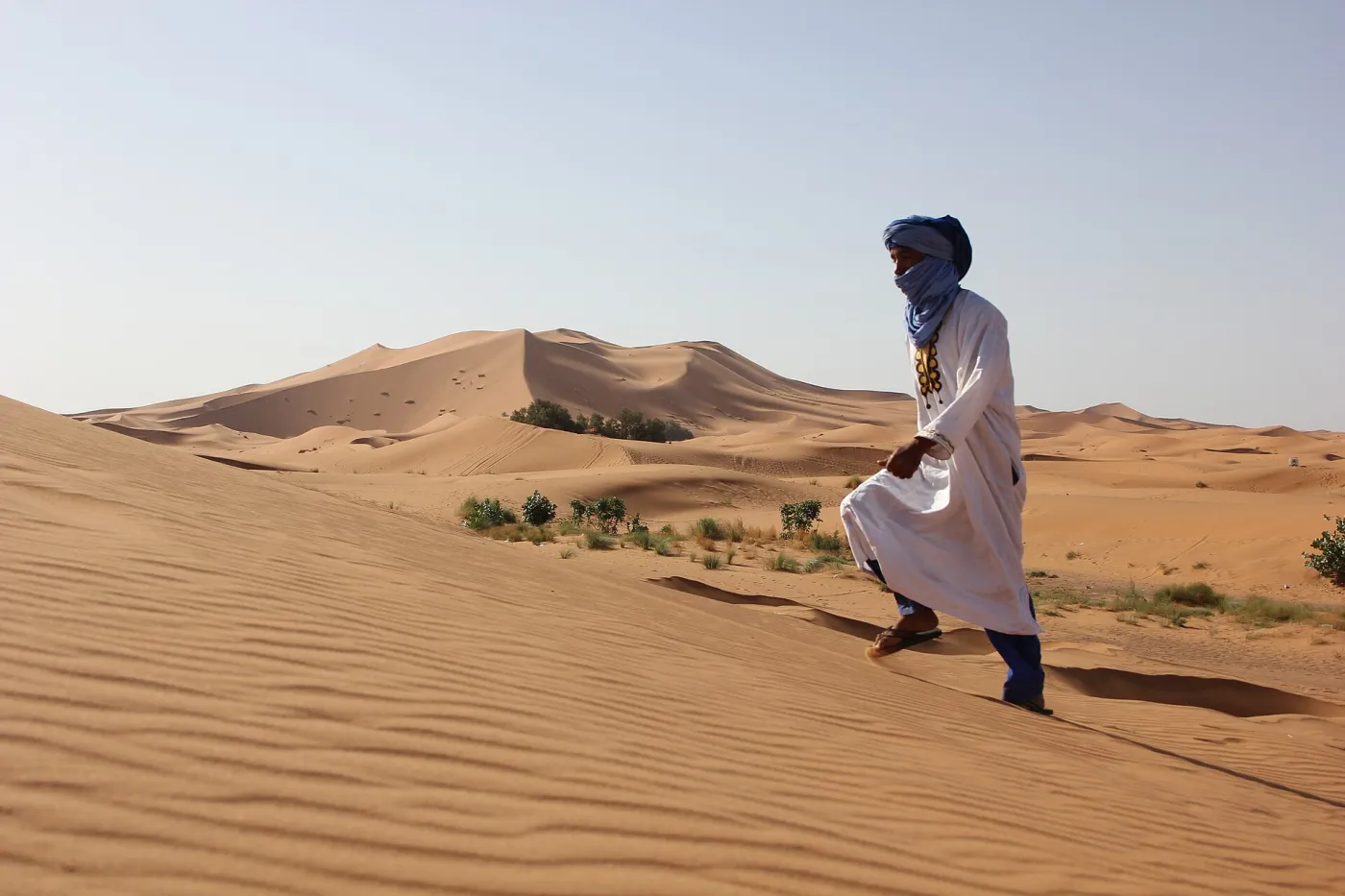
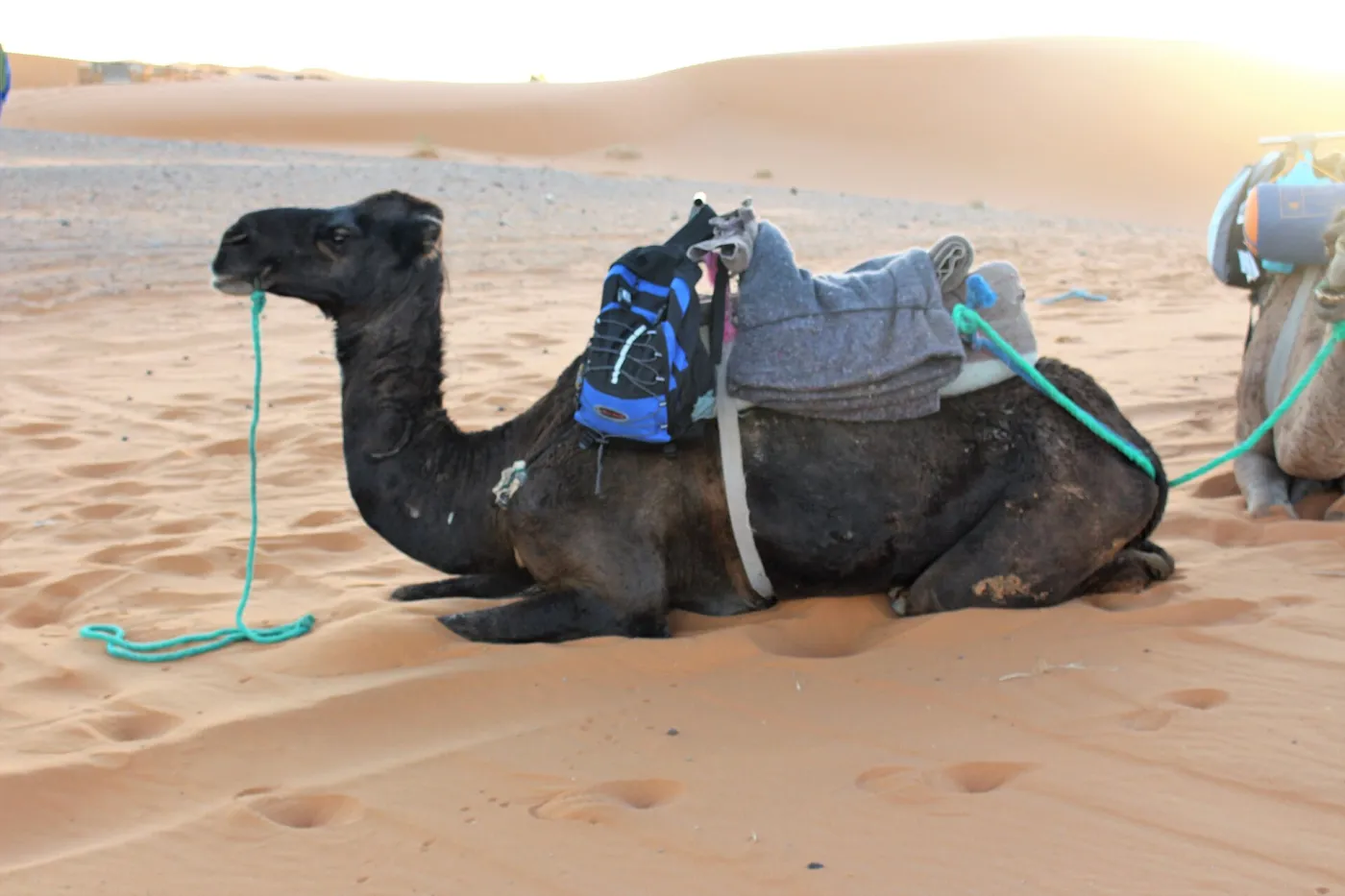
The classic experience is a camel ride of about 1–1.5 hours from the edge of Merzouga into the dunes, timed to catch sunset from a ridge before arriving at a camp for dinner. The following morning you ride or walk back after sunrise. Dromedaries are led on foot by a cameleer, so no riding experience is needed.
Longer treks
Two-night treks deeper into the erg, or rides to a remote bivouac, are possible with advance notice. They trade comfort for solitude.
Comfort tips
- Lean back when the camel stands up and kneels down; it rises back legs first.
- Wear long trousers to prevent chafing.
- Keep a scarf over your face if the wind rises.
- Travellers over about 110 kg or with back problems can ask for the 4x4 transfer instead.
Sandboarding
Camps and guesthouses lend or rent sandboards, often for a small fee of roughly 50–100 MAD, sometimes free. The steep lee slopes of the bigger dunes give short, fast runs. Sand is slower than snow, so waxing the base helps, and the hard part is the climb back up. Late afternoon is best, when the sand has cooled. Snowboard skills transfer, but beginners manage fine sitting down.
Sunrise and sunset viewpoints
Most camps have a dune ridge within a 10–20 minute walk. For the widest views, climb as high as you can on the western side at sunset and the eastern side at sunrise. Sunrise ranges from about 6:00 in June to about 7:30 in December. Start climbing 30–40 minutes earlier: walking uphill in soft sand is slower than you expect. Our guide to the best months for the Sahara covers light, wind and moon phases.
Other activities around the erg
| Activity | Typical duration | Approx. cost | Notes |
|---|---|---|---|
| 4x4 tour around Erg Chebbi | 3–5 h | Varies; shared cost per vehicle | Khamlia, nomad families, fossil sites, old mines, Lake Dayet Srji when it holds water |
| Quad bike | 1–2 h | Roughly 300–600 MAD per hour | Only with a licensed operator and guide |
| Khamlia Gnawa music | 1 h | Usually tea and a contribution | Families of sub-Saharan origin preserve Gnawa music |
| Rissani market | 1–2 h | Free | Busiest on Sunday, Tuesday and Thursday |
| Sand bath | 15–20 min | Varies | Traditional summer treatment in hot sand |
Prices are approximate and depend on season and negotiation; confirm before you start.
Stargazing
With minimal light pollution and dry air, Erg Chebbi is one of the best places in Morocco to see the Milky Way, especially from late spring to early autumn and within a few days of the new moon. Walk a few minutes away from the camp lights and give your eyes 15 minutes to adjust.
Staying safe in the dunes
- Do not wander off alone at night; dunes look identical in the dark.
- Carry water even for a short walk; in summer, midday sand surface temperatures exceed 60°C.
- Respect the border zone to the east.
- Avoid quads and 4x4s near camps and walking areas; choose operators who stay on established tracks.
Where to sleep
You can sleep in a guesthouse in Merzouga or Hassi Labied and visit the dunes by day, but a night in the erg is what makes the experience. Camps range from simple to very comfortable; our comparison of standard and luxury Merzouga camps explains the differences. And if you are deciding between this erg and the smaller dunes of the Draa Valley, read our Zagora versus Merzouga comparison.
A suggested full day in Erg Chebbi
If you add an extra night in Merzouga, a full day lets you see the erg in different light and try more than the camel ride:
- Sunrise (6:00–7:30 depending on season): climb the ridge behind your camp.
- Morning: 4x4 loop to Khamlia for Gnawa music, a nomad family for tea and the fossil beds, returning via Lake Dayet Srji if it holds water after winter rain.
- Midday: lunch and rest in Merzouga or Hassi Labied; this is when heat peaks.
- Late afternoon: sandboarding on a steep face as the sand cools.
- Sunset: a hike to the big dune for the widest view of the erg turning red.
Fossils and minerals
The region between Erfoud, Rissani and Merzouga is rich in marine fossils from the Devonian period, including orthoceras and trilobites, and several workshops polish them into tables and souvenirs. Quality and authenticity vary; many trilobites sold as whole specimens are partly reconstructed. Buy from workshops where you can see the cutting process, and ask for an invoice if you plan to carry large pieces home.
Photography tips for the dunes
The low sun in the first and last hour creates the strong shadows that give dunes their shape, while midday light flattens them. Walk along a ridge rather than across it to avoid putting footprints in your foreground, and include a person or camel for scale; without it, a 100 m dune can look like a sandpit. Protect your gear from wind-blown sand by keeping it in a sealed bag between shots.
Getting to Erg Chebbi from Marrakech
Merzouga is about 560 km from Marrakech, so the dunes need a minimum of three days. Our 3-day Erg Chebbi desert tour from Marrakech, from €140 per person, includes free pickup, a licensed driver, the sunset camel trek and a camp night, with sandboarding available at camp. Explore every route on our desert tours page, or tell us on WhatsApp which activities you would like to add.
Comments