In this guide
- How desert packing differs from normal travel
- The core list for any season
- Season-by-season clothing
- Footwear
- What to wear for cultural comfort
- The overnight bag for camp
- What to leave behind
- Photography tips for sand and wind
- Packing for the drive itself
- Packing for travellers with specific needs
- Quick checklist
- Ready for the desert
For a Sahara desert tour, pack for two climates in one day: light, loose, long-sleeved clothing, a scarf, sunglasses and high-SPF sunscreen for daytime, plus a warm fleece or down jacket for the evening, because desert nights drop to around 0–5°C in winter and still feel cool in spring and autumn. Bring a headlamp, a power bank and a small overnight bag, since main luggage usually stays in the vehicle when you ride camels to camp.
How desert packing differs from normal travel
Three things shape your packing list. First, the temperature swing: Merzouga sits at roughly 700 m altitude, and the dry air loses heat fast after sunset, so a 25°C afternoon in March can become a 5°C night. Second, sand gets into everything, especially zips, phones and camera lenses. Third, you ride a camel for 1–1.5 hours to camp with only what you can carry, so a compact daypack matters more than the suitcase.
The core list for any season
- Small backpack (20–30 L) for the camp night; your suitcase stays locked in the vehicle.
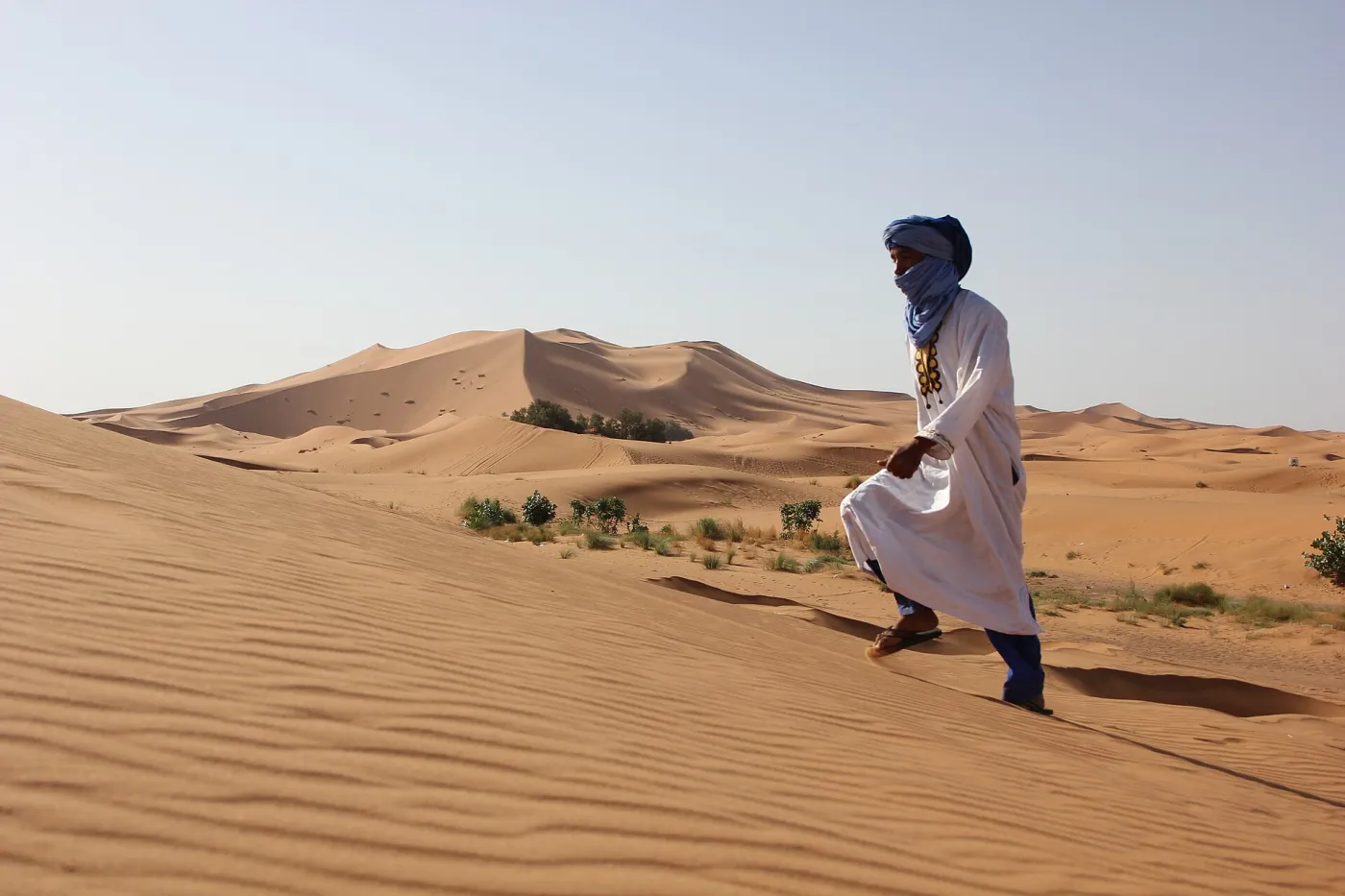
- Scarf or cheche (a long cotton turban cloth, sold cheaply in Merzouga and Rissani) to cover face and neck against wind and sand.
- Sunglasses with UV protection, ideally wraparound.
- Sunscreen SPF 50 and lip balm; desert sun reflects off sand.
- Headlamp or small torch; camp paths and standard-camp bathrooms are dimly lit.
- Power bank; standard camps may offer only limited solar charging.
- Reusable water bottle; drink 2–3 litres a day, more in summer.
- Wet wipes and hand sanitiser, plus a small toilet roll.
- Zip-lock bags for your phone and camera when the wind picks up.
- Cash in dirhams for lunches, drinks, souvenirs and tips.
- Basic medicine: motion-sickness tablets for the mountain roads, rehydration salts, plasters.
Season-by-season clothing
| Season | Typical day / night in Merzouga (approx.) | What to add |
|---|---|---|
| Winter (Dec–Feb) | 16–20°C / 0–5°C, sometimes below freezing | Down or insulated jacket, thermal base layer, beanie, gloves, warm socks; the Tichka pass can be snowy |
| Spring (Mar–May) | 24–33°C / 8–17°C | Fleece or light puffer, windproof layer for sandy spring winds, sunhat |
| Summer (Jun–Aug) | 38–45°C / 24–28°C | Loose linen or cotton, wide-brimmed hat, electrolytes; a light layer is still useful at dawn |
| Autumn (Sep–Nov) | 25–36°C / 10–22°C | Light layers by day, a fleece for November evenings |
Temperatures vary from year to year; check a forecast for Merzouga or Zagora a few days before departure. For a fuller picture of conditions each month, see our guide to the best time to visit the Moroccan Sahara.
Footwear
Sand is easiest barefoot or in sandals, but hot sand in summer and cold sand at dawn in winter both call for closed shoes. A practical combination is trainers for the drive and gorge walks plus sport sandals for the dunes. Heavy hiking boots are unnecessary. If you plan to climb the higher ridges of Erg Chebbi for sunrise, expect sand to fill any low-cut shoe; gaiters help, but many travellers simply go barefoot once the sand has warmed.
What to wear for cultural comfort
The villages en route, from Aït Benhaddou to Tinghir, are conservative rural communities. Shoulders and knees covered is respectful for both men and women, and it is also the best sun protection. Loose trousers and long-sleeved shirts work better than shorts on a camel, where the saddle can chafe bare legs.
The overnight bag for camp
- Warm layer and sleeping clothes (camps provide bedding and blankets).
- Toothbrush, toothpaste and a small towel; standard camps may have shared facilities.
- Headlamp, power bank and charging cables.
- Water bottle and any snacks you like.
- Medication you need overnight.
- Camera with a spare battery, kept in a sealed bag.
What you get at camp differs a lot between standard and luxury tents: private bathrooms, electricity and heating are not universal. Our comparison of luxury and standard desert camps explains what to expect so you can pack accordingly.
What to leave behind
- Large wheeled suitcases on the camel: they stay in the vehicle.
- Drones: importing drones into Morocco is restricted and they are commonly confiscated at customs without prior authorisation.
- Expensive jewellery and anything you would hate to lose in sand.
- Plastic you do not plan to carry out; please take rubbish back with you.
Photography tips for sand and wind
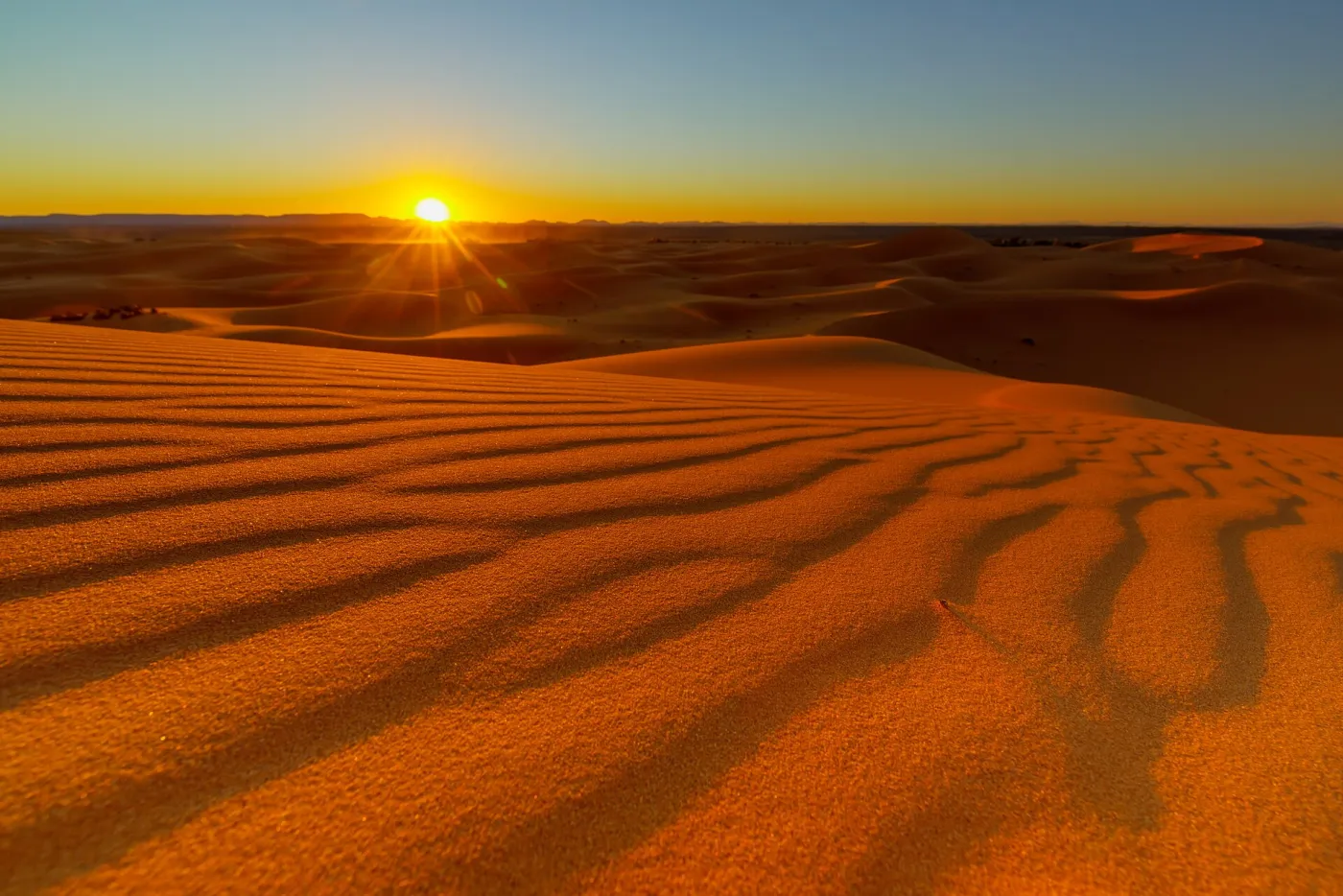
Change lenses inside the vehicle or tent, never on the dunes. A simple rain cover or a plastic bag with an elastic band protects a camera during windy spells, which are most frequent from February to April. Bring a blower brush rather than wiping sand off a lens. For the best light, the hour after sunrise and before sunset on the Erg Chebbi ridges is ideal; our Erg Chebbi dunes guide lists good viewpoints.
Packing for the drive itself
Most of a desert tour from Marrakech is spent in a vehicle, not on a camel. The road over the Tizi n'Tichka pass climbs to 2,260 m, and the Merzouga route involves 9–10 hours of driving each way, so the things in your daypack for the car matter as much as your camp kit.
- A light layer for the Tichka pass, which can be 10°C colder than Marrakech.
- Snacks such as dates, nuts or biscuits; lunch stops are sometimes after 13:30.
- Neck pillow and headphones for the long straight sections.
- Offline maps and music; mobile data drops out in the mountains.
- Small change of 2–10 MAD for toilets at roadside cafés.
Packing for travellers with specific needs
Families with children
Children feel the cold quickly after sunset, so pack a hat and extra layer even in spring. Bring familiar snacks, and consider a luxury tent for the private bathroom. Sand toys are a surprising hit on the dunes.
Older travellers
Walking poles help on soft sand, and a 4x4 transfer to camp can replace the camel if mounting and dismounting is difficult. Bring any daily medication in your overnight bag, not the suitcase that stays in the car.
Photographers
A wide lens for dune landscapes, a telephoto for layered ridges at sunrise, a small tripod for stars, and spare batteries, since cold nights drain them fast.
Quick checklist
If you remember only five things, make them: a warm layer, a scarf, sunglasses, a headlamp and a power bank. Everything else can be bought on the way in Ouarzazate, Tinghir or Merzouga if you forget it. For the full context of the route you are packing for, see our Marrakech to Merzouga day-by-day plan.
Ready for the desert
If you are packing for Merzouga, our 3-day Sahara tour from Marrakech to Merzouga runs from €140 per person, with free pickup in Marrakech, a licensed driver and a night in an Erg Chebbi camp; we are happy to answer packing questions on WhatsApp before you travel. You can also see every route on our Sahara desert tours page.
Comments