In this guide
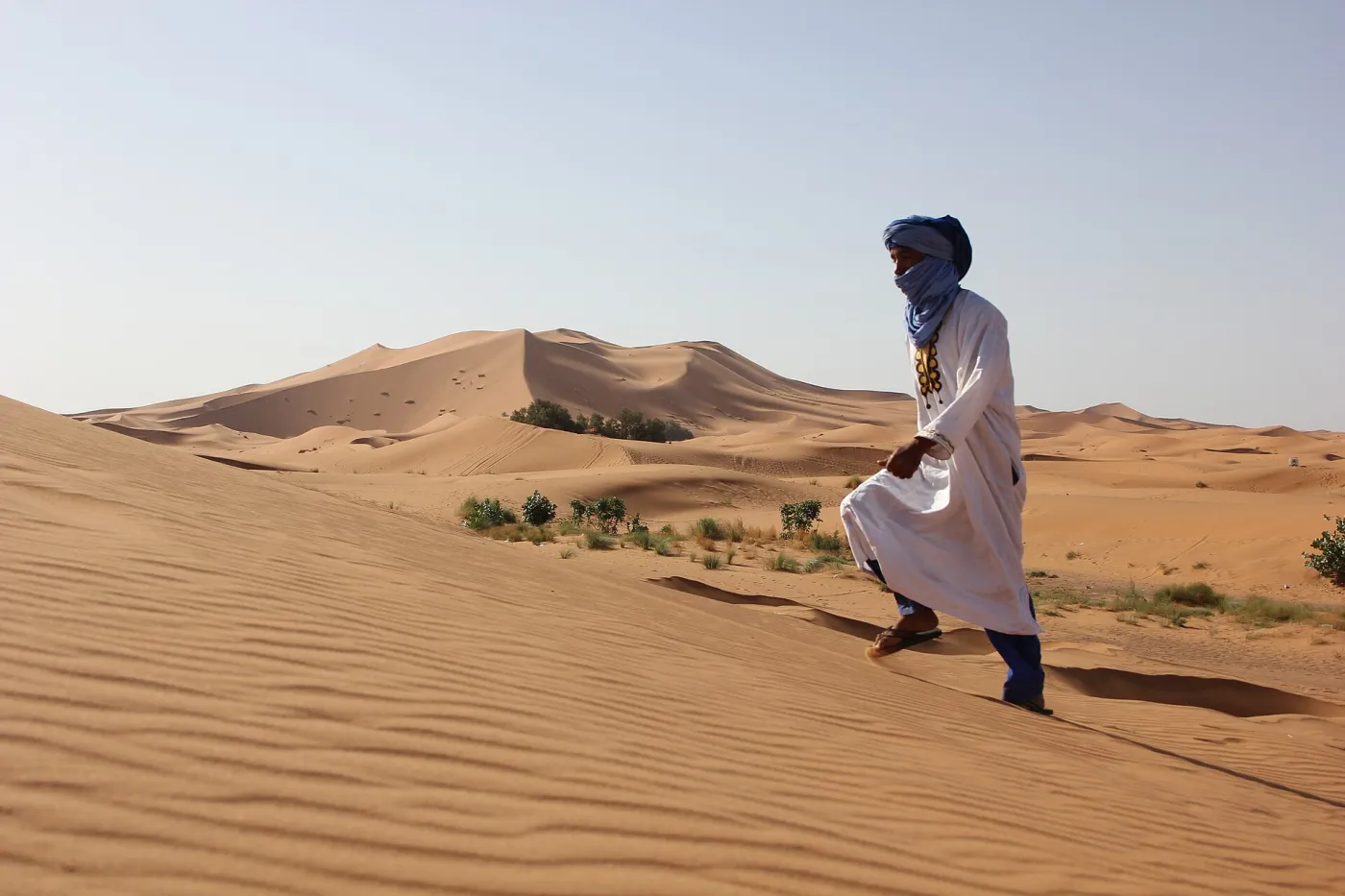
Marrakech to Merzouga in 3 days means roughly 560 km each way, split as follows: Day 1 crosses the High Atlas via the Tizi n'Tichka pass and Aït Benhaddou to an overnight in the Dades Valley (about 8–9 hours with stops); Day 2 continues through Todra Gorge to Merzouga for a sunset camel trek and a night in an Erg Chebbi camp; Day 3 is sunrise on the dunes followed by a 9–10 hour drive back to Marrakech. It is the shortest itinerary that reaches the big dunes without being rushed on the way out.
Is 3 days enough for Marrakech to Merzouga?
Three days and two nights is the practical minimum for Merzouga. The distance from Marrakech is around 560 km by the N9 and N10, and the road climbs to 2,260 m at the Tizi n'Tichka pass before dropping to the pre-Saharan plateaus. Pure driving time is roughly 9–10 hours each way, so a 2-day version would mean two consecutive days of near-nonstop driving. If you only have two days, the closer desert at Zagora is the saner choice; we compare both options in detail in our guide to Zagora versus Merzouga.
The 3-day format front-loads the sightseeing: the outbound journey is spread over two days with stops, while the return on Day 3 is a long transfer day with only short breaks.
Route overview at a glance
| Day | Route | Approx. distance | Approx. driving time | Overnight |
|---|---|---|---|---|
| 1 | Marrakech – Tizi n'Tichka – Aït Benhaddou – Ouarzazate – Dades Valley | 330 km | 6–7 h (8–9 h with stops) | Hotel or kasbah in Dades Valley (Boumalne or Aït Ouffi area) |
| 2 | Dades Gorge – Tinghir – Todra Gorge – Erfoud – Merzouga | 230 km | 4–5 h | Desert camp in Erg Chebbi |
| 3 | Merzouga – Rissani – Alnif – Tazenakht – Tizi n'Tichka – Marrakech | 560 km | 9–10 h | Back in Marrakech (evening) |
Distances and times are approximate and depend on traffic on the Tichka road, weather and roadworks.
Day 1: Marrakech to the Dades Valley
Crossing the High Atlas
Pickup from your hotel or riad is usually between 7:00 and 7:30. The first two hours follow the N9 up through Berber villages and walnut-lined valleys to the Tizi n'Tichka pass at 2,260 m, Morocco's highest paved road pass. The hairpins are well surfaced but slow, and in January and February snow can briefly close the pass. Expect a coffee stop around the Taddert area before the summit.
Aït Benhaddou
Around midday you reach Aït Benhaddou, the fortified ksar listed as a UNESCO World Heritage Site since 1987 and familiar from films such as Gladiator and series such as Game of Thrones. Walking into the village is free; a few inhabited houses charge a small entry of roughly 10–25 MAD. A local guide for about an hour is optional. Allow 60–90 minutes including lunch in one of the restaurants facing the ksar.
Ouarzazate, Skoura and the Rose Valley
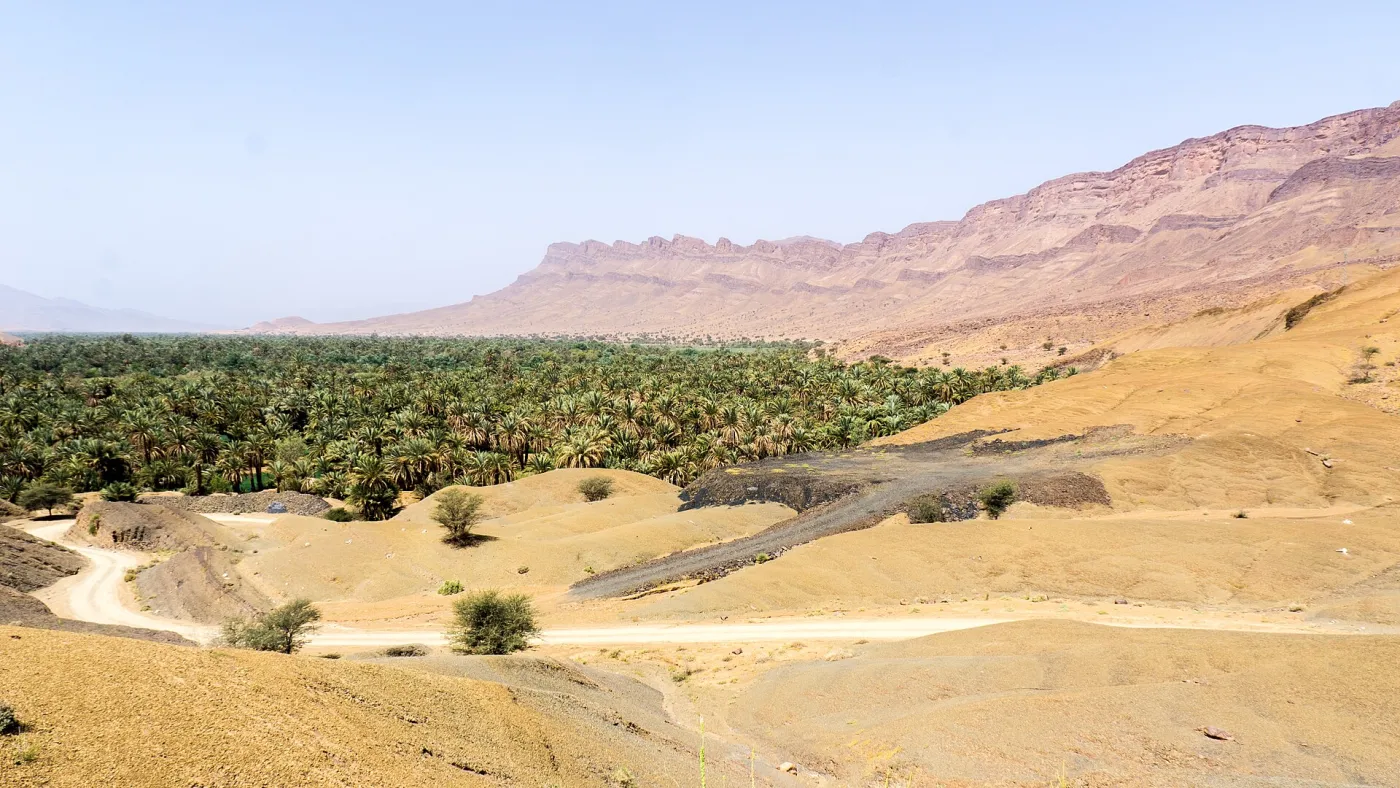
The afternoon passes Ouarzazate, where you can photograph the Taourirt Kasbah from outside, then continues east along the "road of a thousand kasbahs" past the Skoura palm grove and Kelaat M'Gouna, centre of the Rose Valley. In May the area holds its rose festival and distilleries sell rose water by the litre. Arrival in the Dades Valley is usually between 17:30 and 18:30, with dinner at the hotel.
Day 2: Dades Gorge, Todra Gorge and the dunes
Morning in the gorges
After breakfast, a short detour up the Dades Gorge shows the famous switchback road near Tissadrine and the eroded "monkey fingers" rock formations. From Boumalne the route continues 50 km to Tinghir and then about 15 km north into Todra Gorge, where the canyon walls rise to roughly 160 m above a passage that narrows to about 10 m. The walk through the narrowest section takes 20–30 minutes and is free. Our guide to the Dades and Todra gorges covers optional hikes and the best light for photos.
Arrival in Merzouga and the camel trek
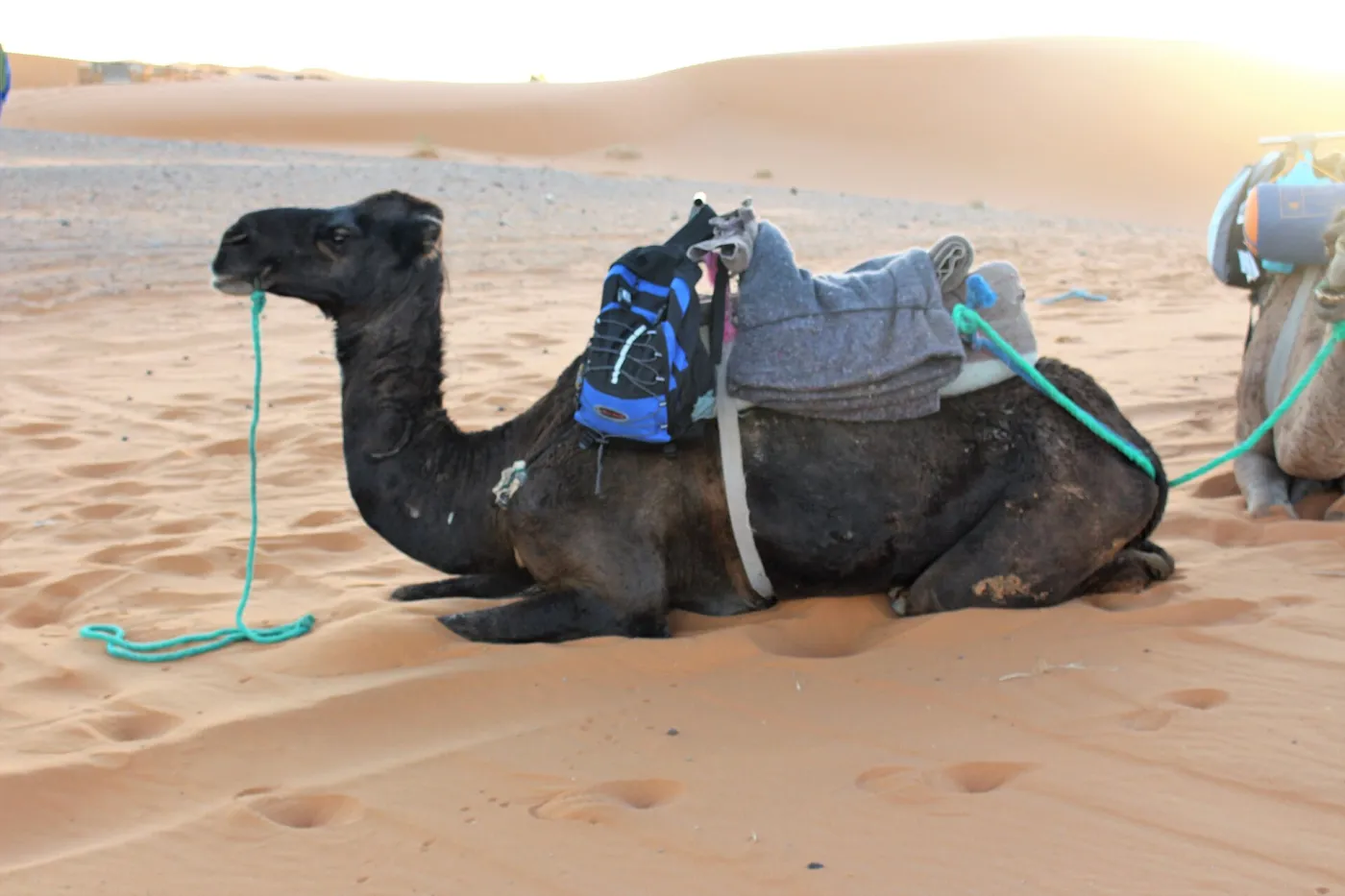
After lunch in Tinghir the drive crosses open hamada via Tinejdad and Erfoud, arriving in Merzouga between 16:00 and 17:00. You leave main luggage in the vehicle and carry a small overnight bag. The camel trek into the Erg Chebbi dunes takes roughly 1–1.5 hours, timed so you watch sunset from a ridge before reaching camp. Dinner is typically harira or salad followed by a tagine, and most camps finish the evening with Gnawa-style drumming around the fire.
Day 3: Sahara sunrise and the long drive back
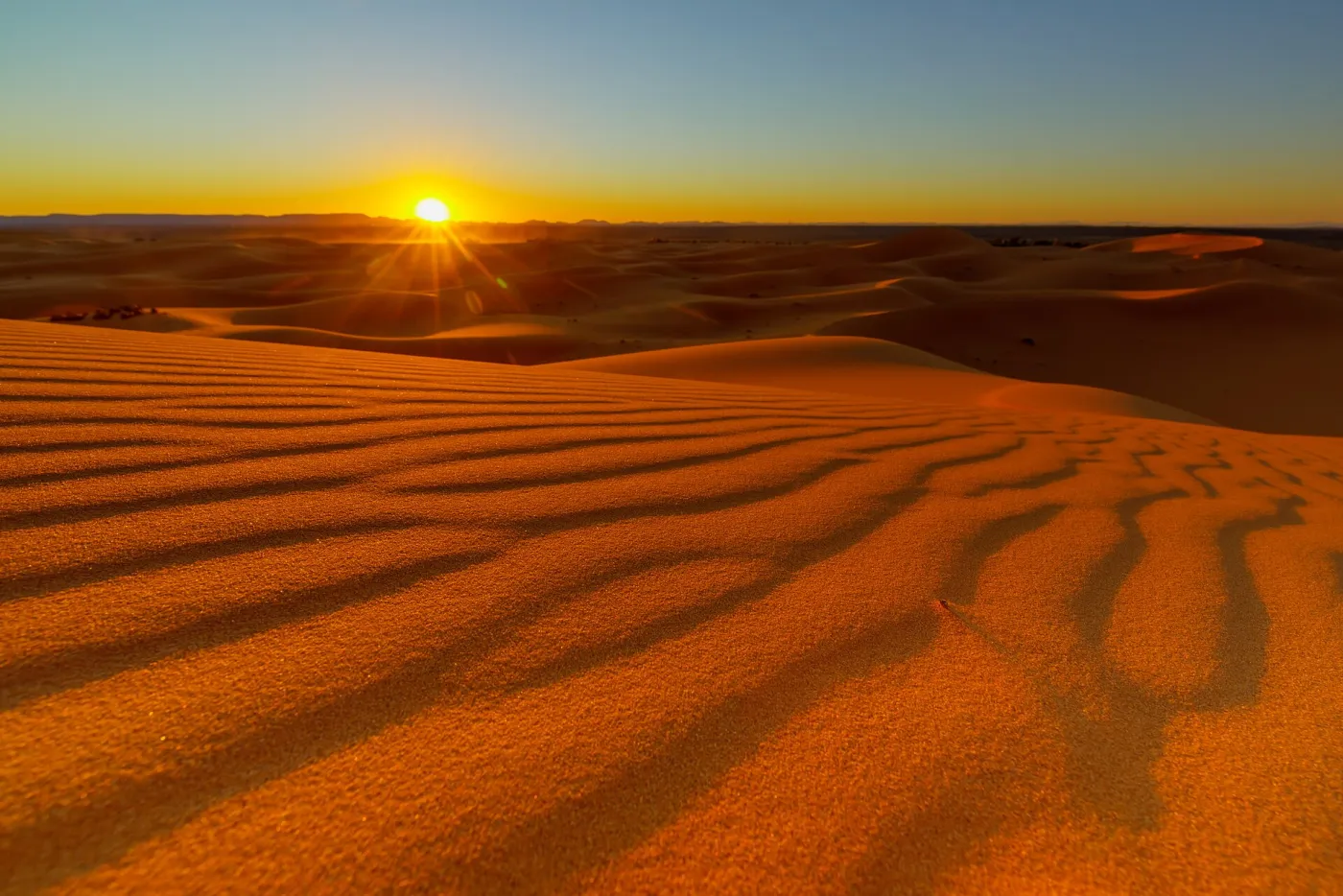
A wake-up call comes around 45 minutes before sunrise, which ranges from about 6:00 in June to about 7:30 in December. You climb a dune to watch the light move across the erg, then ride or walk back to Merzouga for breakfast and a shower at a partner guesthouse. Departure is normally by 9:00.
The return route runs through Rissani, Alnif and Tazenakht, rejoining the Tichka road near Ouarzazate. With a lunch stop and several short breaks you reach Marrakech between 19:00 and 21:00. It is a long day, so keep water and snacks in the car.
Practical tips for this itinerary
- Season: March to May and October to November give the most comfortable temperatures; our article on the best months for the Moroccan Sahara has a month-by-month breakdown.
- Luggage: one small backpack for the camp night; the rest stays locked in the vehicle.
- Motion sickness: the Tichka hairpins and the Dades switchbacks affect some travellers; sit in front and take tablets before departure if you are prone to it.
- Cash: lunches, drinks and optional entrances are paid locally in dirhams; budget roughly 100–200 MAD per person per lunch.
- Packing: nights in the dunes are cold from November to March. See our Sahara packing list by season.
- Camp choice: standard and luxury camps differ mainly in bathrooms, heating and privacy, not in location.
Private or small-group?
Shared small-group departures follow exactly the route above with fixed timings. A private tour uses the same roads but lets you choose where to linger: extra time in Aït Benhaddou, a longer walk in Todra, or a stop at the fossil workshops around Erfoud. Private departures also make it easy to finish in Fes instead of returning to Marrakech, which removes the long Day 3 drive back over the Atlas.
Book the 3-day Merzouga route
Our 3-day Marrakech to Merzouga Sahara desert tour follows this itinerary, from €140 per person, with free pickup from your Marrakech hotel or riad, licensed local drivers, a Dades Valley overnight and a night in an Erg Chebbi camp. Small-group and private options are available and the itinerary can be adjusted. To compare it with shorter and longer desert routes, browse all our Sahara desert tours from Marrakech, or message us on WhatsApp to check dates.
Comments