In this guide
The Moroccan dishes most worth trying in Marrakech are tanjia (the city's own slow-cooked beef or lamb), tagine, Friday couscous, pastilla, harira soup, mechoui lamb and msemen flatbread, all washed down with mint tea. You can eat most of them for 5–100 MAD at street stalls and local restaurants. Tanjia and mechoui are best around the Mechoui Alley near Jemaa el-Fna.
Moroccan cooking mixes Amazigh (Berber), Arab, Andalusian and sub-Saharan traditions. It is built on slow cooking, preserved lemons, smen (aged butter) and spice blends such as ras el hanout, which can contain 20 or more spices. Marrakech has a few dishes of its own and some of the best street food in the country. Prices below are approximate for 2026.
Main Dishes
- Tanjia marrakchia. Beef or lamb with cumin, garlic, saffron and preserved lemon, sealed in a clay urn and left for 6–8 hours in the ashes of a hammam furnace. It was traditionally a bachelors' Friday dish. Expect 70–120 MAD per portion near Jemaa el-Fna.
- Tagine. Named after its conical pot. Classic versions are chicken with preserved lemon and olives, lamb with prunes and almonds, kefta with eggs, and seasonal vegetables. A small tagine costs 50–120 MAD in local restaurants.
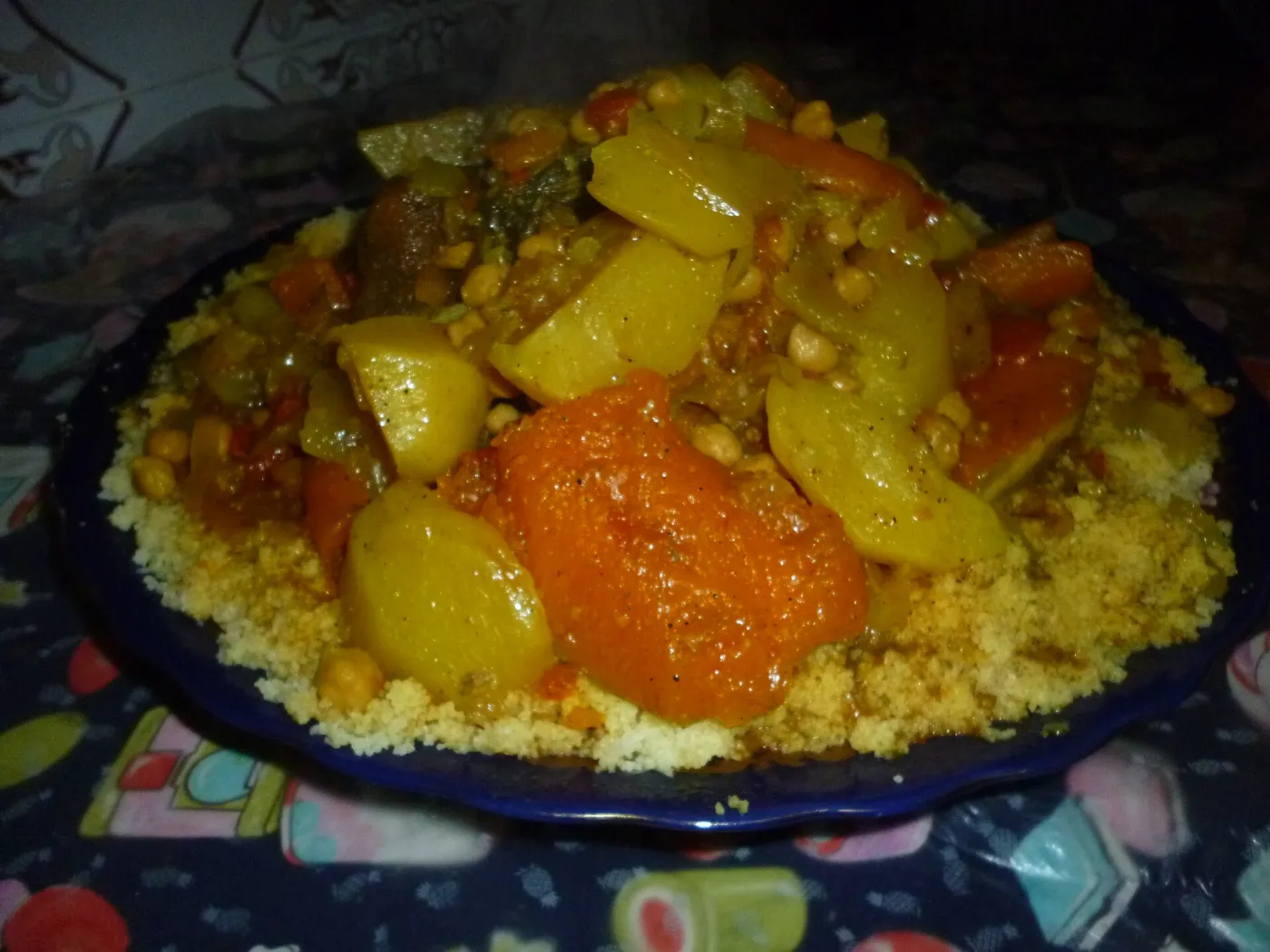
- Couscous. Steamed semolina with seven vegetables and meat, traditionally eaten on Fridays after midday prayers. Many restaurants serve it only on Fridays.
- Pastilla (bastilla). A flaky warqa pastry pie with pigeon or chicken, almonds, cinnamon and powdered sugar. The seafood version comes from the coast.
- Mechoui. Whole lamb roasted in an underground clay oven until it falls apart, sold by weight with cumin and salt. Around 250–350 MAD per kg.
- Rfissa. Shredded msemen soaked in a fenugreek-lentil chicken broth, traditionally cooked to celebrate a birth.
- Kefta and brochettes. Grilled spiced minced beef or lamb skewers, the main dish at the night stalls.
Soups and Salads
- Harira. A tomato, lentil and chickpea soup that breaks the fast during Ramadan. It costs 5–10 MAD at stalls, often served with dates and chebakia.
- Bissara. A thick fava bean or split pea soup with olive oil and cumin. It is a cheap winter breakfast.
- Zaalouk. A smoky mash of aubergine and tomato, eaten with bread.
- Taktouka. Roasted peppers and tomato. It is usually part of the cooked-salad spread that opens a Moroccan meal.
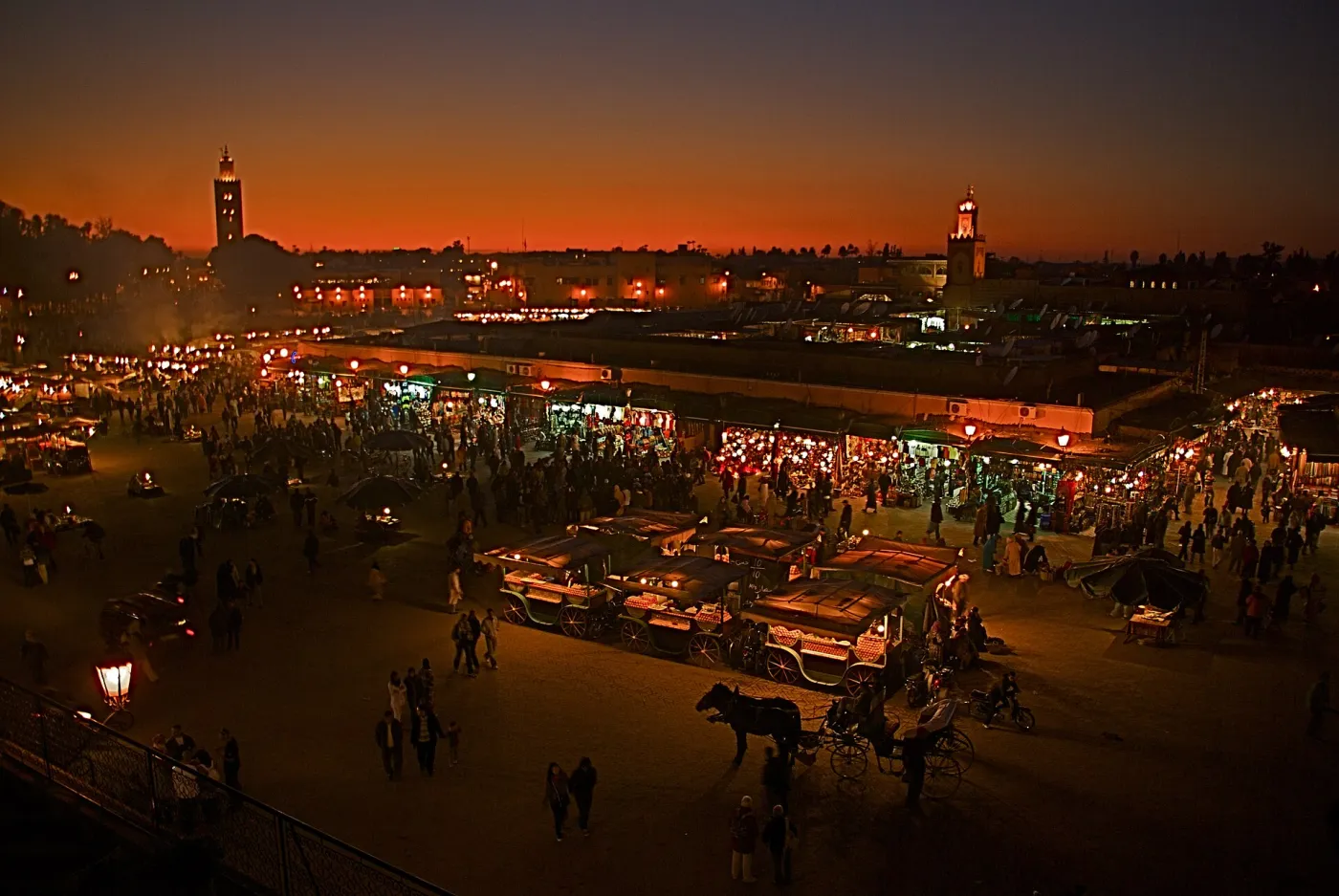
- Babbouche (snail soup). Snails in a broth of 12–15 herbs and spices, served from carts on Jemaa el-Fna. It costs 5–10 MAD a bowl.
Breads and Breakfast
- Khobz. A round wheat loaf, often baked in the neighbourhood's communal ferran oven. Bread is also your cutlery.
- Msemen. A square laminated flatbread fried on a griddle and served with honey or amlou. It costs 2–5 MAD from street griddles.
- Baghrir. The "thousand-hole" semolina pancake, soaked in butter and honey.
- Amlou. A paste of roasted almonds, argan oil and honey from the Souss region. You'll find it at riad breakfasts.
Sweets and Drinks
- Mint tea. Gunpowder green tea brewed with fresh spearmint and plenty of sugar, poured from a height to make foam. Ask for bla sukkar if you want it without sugar.
- Chebakia. Sesame dough folded into flower shapes, fried and dipped in honey.
- Sellou (sfouf). A dense, unbaked mix of toasted flour, almonds, sesame and spices. It is sold by weight.
- Fresh orange juice. Marrakech sits in a citrus region, and fresh juice costs 10–15 MAD a glass on the square.
Where and How to Eat
| Where | What to order | Typical spend |
|---|---|---|
| Jemaa el-Fna night stalls | Brochettes, harira, snails, fried fish | 60–120 MAD pp |
| Mechoui Alley (northeast of the square) | Tanjia, mechoui by weight | 70–150 MAD pp |
| Local snack restaurants in the medina | Tagine, couscous (Fri), msemen | 50–100 MAD pp |
| Riad or palace restaurants | Pastilla, set Moroccan menu | 250–600 MAD pp |
The night stalls on the square have their own rules and hustlers. Read our Jemaa el-Fna guide before you go. If you want to take spices home, the souk price guide lists fair prices for saffron and ras el hanout.
Eating etiquette
- Eat with your right hand from the side of the shared dish nearest to you, and use bread to scoop.
- Alcohol is sold only in licensed restaurants and hotels. The medina street food is alcohol-free.
- During Ramadan most local places close by day, and the city eats at sunset.
- Vegetarians can eat well with vegetable tagine and couscous, zaalouk, bissara and lentils. Ask for bla lham (without meat).
- Drink bottled or filtered water, and choose busy stalls where food is cooked to order.
Spices and Flavours to Know
- Ras el hanout. "Head of the shop": the spice merchant's house blend, heavy on cumin, ginger, cinnamon and pepper.
- Preserved lemon (l'hamd mrakad). Lemons cured in salt for at least a month. They give chicken tagine its sour depth.
- Smen. Salted, aged clarified butter with a strong, cheese-like flavour, used sparingly in couscous and harira.
- Saffron. Grown around Taliouine in the Anti-Atlas. It goes into tanjia, pastilla and festive tagines.
- Chermoula. A marinade of coriander, parsley, garlic, cumin, paprika and lemon, used for fish and grilled meat.
Is street food safe?
Generally, yes, if you follow the usual rules: eat food that is hot and cooked in front of you, avoid salads washed in tap water at the most basic stalls if your stomach is sensitive, and peel your fruit. Many travellers pack oral rehydration salts just in case.
A Food Day in Marrakech: Sample Plan
Start with msemen, amlou and mint tea at a street griddle or your riad (8:30). Stop for fresh orange juice on the square mid-morning. Eat tanjia and bread in Mechoui Alley for lunch. In the late afternoon have a sweet mint tea with chebakia in a café. For dinner, share harira, brochettes and zaalouk at the night stalls. The whole day costs around 200–250 MAD per person and covers most of this list.
Learn to Cook It Yourself
A cooking class is the best way to take the food home with you. Our Moroccan cooking class with a market visit starts in a local souk buying vegetables and spices. You then cook a tagine, salads and bread with a local cook and eat what you made. It takes 4 hours and costs from €45 per person. It fits easily into a three-day stay in Marrakech. Browse the rest of our Marrakech experiences to plan the rest of your stay.
Comments