In this guide
Fes el-Bali, founded in 789 and listed by UNESCO in 1981, is the largest car-free urban area in the world, with thousands of lanes and around 70,000 residents. The best way to explore it is a half-day with a licensed guide on your first morning, followed by independent wandering along the two main streets, Talaa Kebira and Talaa Seghira, which run downhill from Bab Boujloud to the Qarawiyyin quarter.
Understanding the layout
Fes has three parts: Fes el-Bali (the old medina), Fes el-Jdid (the 13th-century Marinid royal town with the Royal Palace gates and the Mellah) and the Ville Nouvelle built under the French Protectorate. Almost everything visitors want is in Fes el-Bali, a valley that slopes down to the Oued Fes river. Goods are still moved by donkey and handcart; when you hear "balak!" step aside.
The key orientation points are:
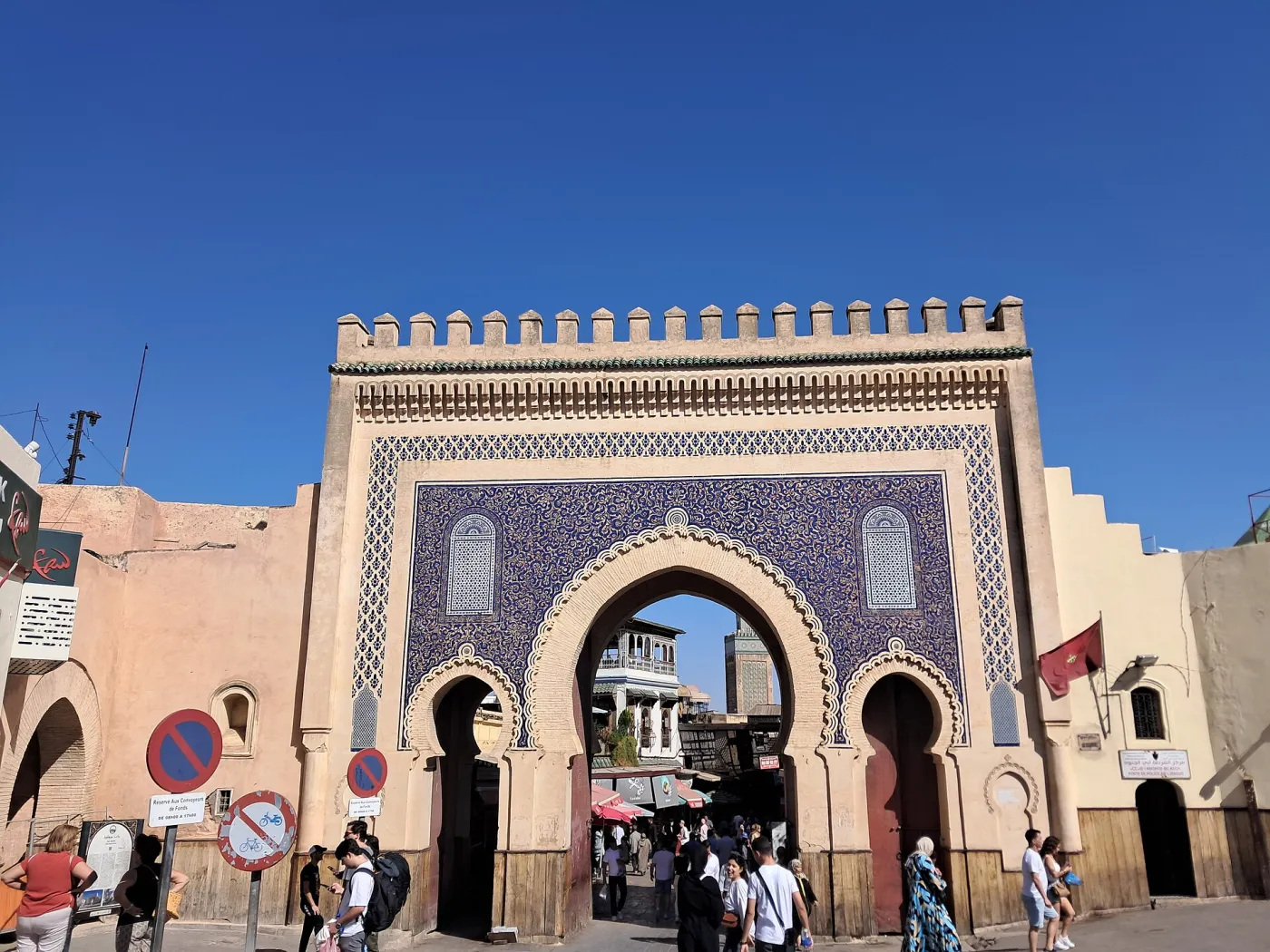
- Bab Boujloud (the Blue Gate, 1913) — the main western entrance and taxi drop-off.
- Talaa Kebira and Talaa Seghira — the two parallel main streets leading downhill.
- Place Seffarine — the coppersmiths' square beside the Qarawiyyin.
- Bab Rcif — the lower gate with taxis back up to the top.
Key sights and entrance fees
| Sight | What it is | Approx. fee |
|---|---|---|
| Bou Inania Madrasa | 1350s Marinid college, zellij and carved cedar; one of few religious buildings open to non-Muslims | 20 MAD |
| Al-Attarine Madrasa | 1320s, finest stucco work in Fes, next to the Qarawiyyin | 20 MAD |
| Cherratine Madrasa | 17th-century Alaouite college, quieter | 10 MAD |
| Nejjarine Museum | Woodwork museum in a restored fondouk, rooftop café | around 20 MAD |
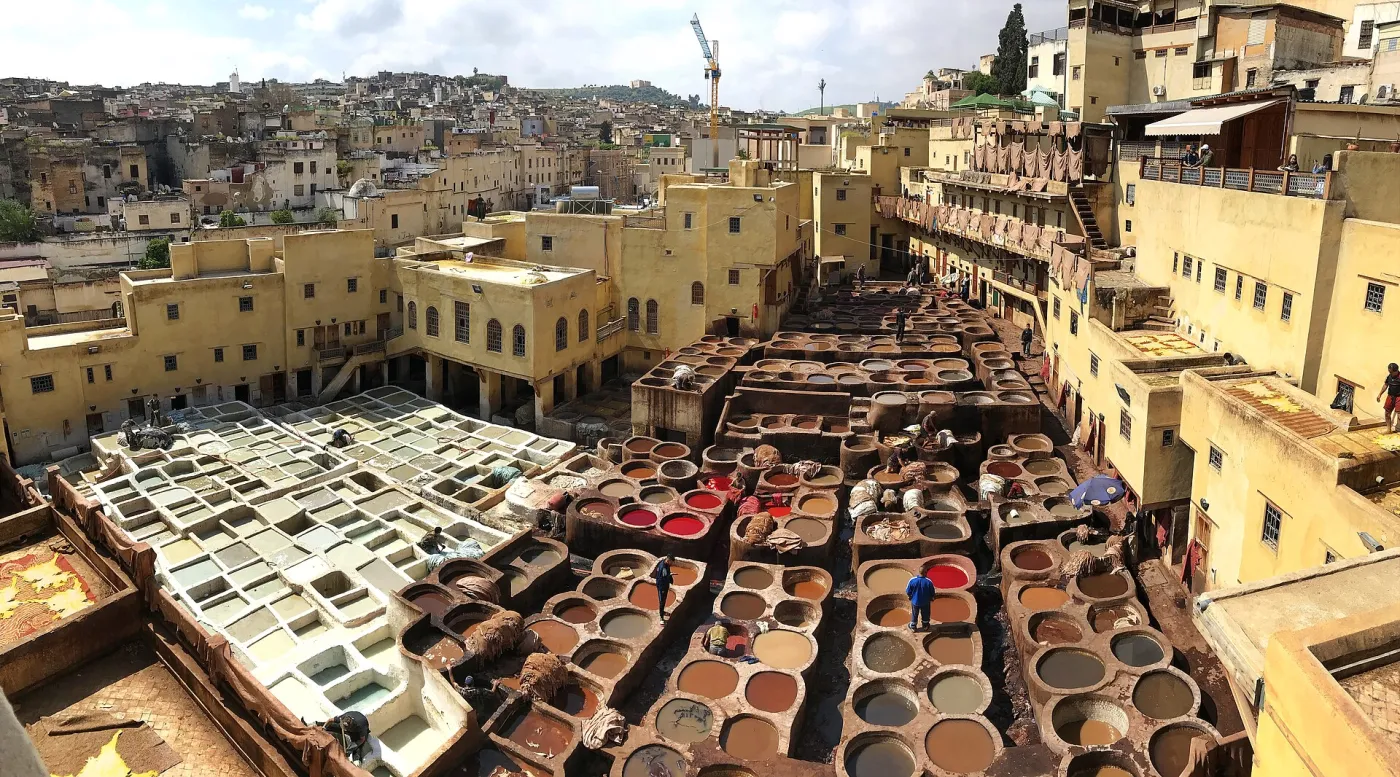
| Chouara Tannery | Medieval dye pits viewed from shop terraces | No ticket; tip 10–20 MAD |
| Al-Qarawiyyin | Founded 859 by Fatima al-Fihri; view through the doors (non-Muslims cannot enter) | Free |
| Dar Batha Museum | Andalusian-style palace with arts collections | varies, around 20–60 MAD |
Most monuments open roughly 9 am–6 pm; the madrasas close to visitors during prayer times and fees change without notice, so treat these as approximate.
The Chouara tannery: how to visit
There is no official entrance. You climb through one of the leather shops that surround the pits, receive a sprig of mint to hold against the smell, and look down on the vats of lime, pigeon-dropping solution and natural dyes. Go in the morning, when the dyers are working and the light is best. It is normal to tip 10–20 MAD if you don't buy; you are under no obligation to buy leather, however insistent the sales pitch. Ignore anyone in the street who says the tannery is "closed" or "only open today" and offers to take you — they are touts.
Do you need a guide in Fes?
For the first visit, yes. Fes is the medina where getting lost is almost guaranteed, and false guides are persistent. A licensed guide carries an official badge issued by the tourism authorities; half-day rates are roughly 300–500 MAD for a small group, and full days a little more. Agree beforehand that shopping stops are optional. On our tours a licensed Fes guide is included.
Navigating on your own
- Download an offline map (Maps.me or Google Maps offline); GPS works but lanes overlap.
- Keep going downhill to reach the Qarawiyyin and Seffarine; uphill leads back to Bab Boujloud.
- Ask shopkeepers rather than young men who approach you, and don't follow someone who "just wants to help".
- Many riads send someone to meet you at a gate — ask for this on arrival.
A suggested one-day route
- Start at Bab Boujloud at 9 am and walk down Talaa Kebira.
- Visit Bou Inania Madrasa and look for the water clock opposite.
- Continue to the Nejjarine fountain and museum.
- Pass the Zaouia of Moulay Idriss II (view from outside) and the Kissaria textile souk.
- Al-Attarine Madrasa, then the Qarawiyyin doorways.
- Place Seffarine and the coppersmiths.
- Chouara tannery by late morning.
- Lunch in the medina, then the Merenid Tombs viewpoint at sunset for the panorama over the whole city.
How long to stay in Fes
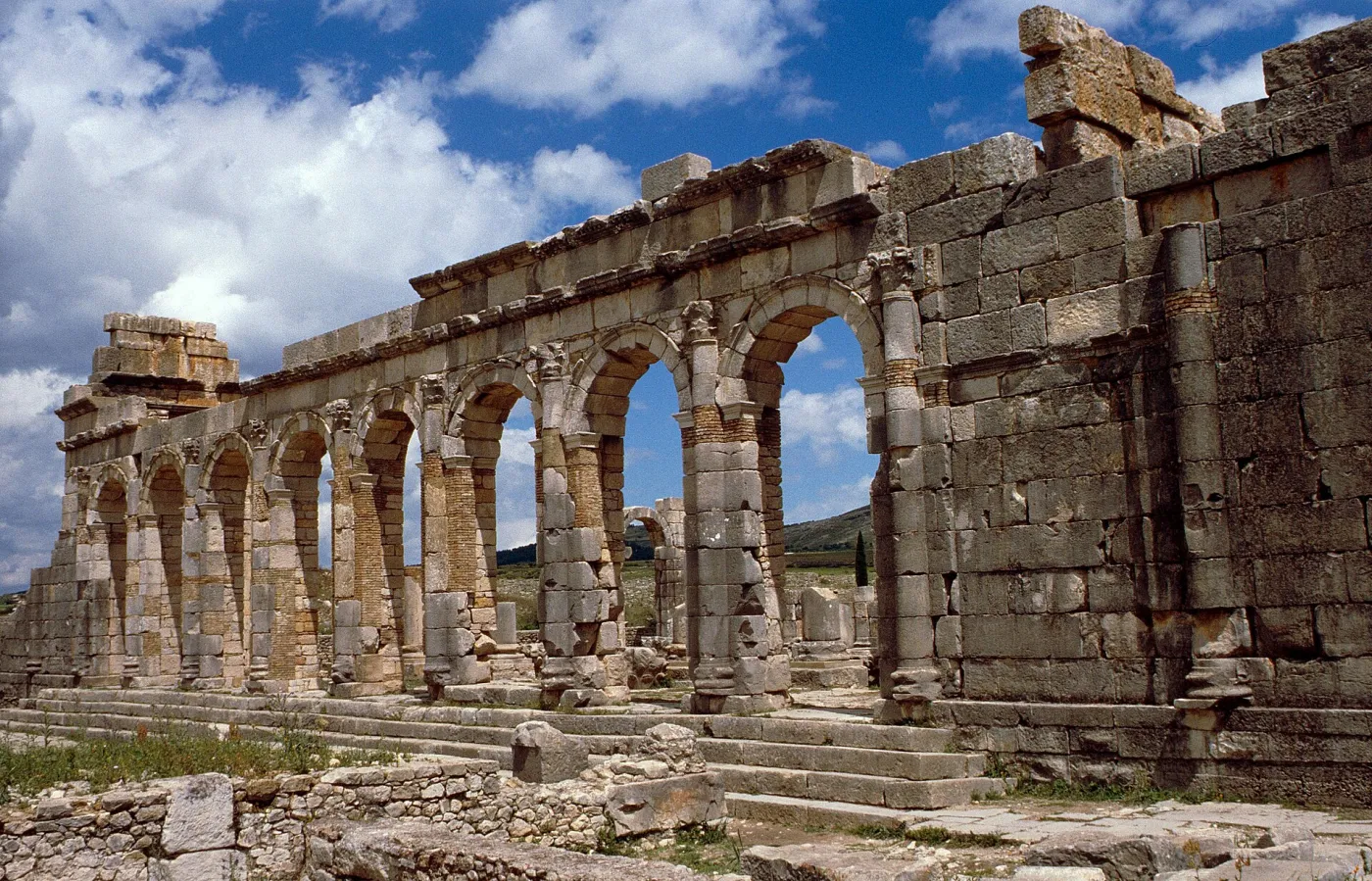
Two nights is the minimum, giving one full day in the medina. Three nights lets you add a day trip to Volubilis (entry about 70 MAD), Moulay Idriss and Meknes, all within 60–80 km. Both our one-week Morocco itinerary and the longer 10-day route through the imperial cities and Chefchaouen include this pattern.
Getting to Fes
- From Marrakech: about 7 hours by ONCF train via Casablanca, or over two to three days via the Sahara by road.
- From the Sahara (Merzouga): about 470 km, 8 hours via Midelt and Ifrane.
- From Chefchaouen: roughly 200 km, 3.5–4 hours.
- By air: Fès–Saïss airport is about 15 km south of the city.
Practical tips
- Friday midday many shops close for prayers; plan the tannery for another morning if you can.
- Wear closed, grippy shoes: lanes are steep and slippery after rain.
- Summer afternoons reach 35–38 °C; winter brings rain from November to March. The month-by-month weather guide for Morocco shows the best windows.
- Carry small notes for fees and tips; cards are rarely accepted in the medina.
Frequently asked questions
Is Fes el-Bali really the largest car-free medina?
It is widely described as the largest car-free urban area in the world. Estimates of the number of streets and alleys vary from several thousand to over 9,000, many of them dead ends, which is why even Moroccans from other cities hire guides here.
Can non-Muslims enter the Qarawiyyin?
No. The mosque is active, and non-Muslims can look into the courtyard from several doorways. The restored library is occasionally shown to visitors, but access is not regular. The madrasas give a very good idea of the same architecture.
Where should I stay in Fes?
Stay inside Fes el-Bali in a riad near Bab Boujloud or Batha if you want easy taxi access, or deeper in the medina for atmosphere. The Ville Nouvelle has modern hotels but lacks character.
Is Fes better than Marrakech?
They are different. Marrakech is livelier and more oriented to visitors; Fes is older, more intact and more of a working medina, with artisans still producing leather, brass and textiles by hand. Most first-time visitors enjoy seeing both.
Seeing Fes as part of a longer trip
Most travellers reach Fes after a night in the Sahara. Our 7-day tour from Marrakech to Fes via the Sahara includes a full guided day in Fes el-Bali with a licensed local guide, plus Volubilis and Meknes, from €690 per person with free riad pickup in Marrakech. See all our multi-day Morocco itineraries or ask us on WhatsApp to add an extra night in Fes.
Comments