In this guide
- Why the answer depends on where you go
- Morocco weather month by month
- Spring (March–May): the all-round winner
- Summer (June–August): coast and mountains
- Autumn (September–November): warm, golden and quieter
- Winter (December–February): sunny but cold at night
- Ramadan and public holidays
- Best time by activity
- Packing by season
- Frequently asked questions
- Plan your dates around a tour
The best time to visit Morocco is spring (March to May) and autumn (September to November), when Marrakech and Fes sit between roughly 20 and 30 °C, the Sahara is comfortable by day and the High Atlas passes are clear of snow. Summer suits the Atlantic coast and the mountains but is very hot inland, while winter is mild and sunny by day with cold nights and snow above about 2,000 m.
Why the answer depends on where you go
Morocco has four distinct climate zones within a day's drive of each other. The Atlantic coast (Essaouira, Rabat, Casablanca) is moderated by the ocean and rarely exceeds 28 °C. The inland imperial cities (Marrakech, Fes, Meknes) are hot in summer and cool in winter. The High Atlas gets snow from roughly December to March, with Toubkal (4,167 m) snow-covered into spring. The Sahara around Merzouga and Zagora swings from over 40 °C in July to near freezing on January nights.
That is why a multi-city route such as the one-week Marrakech-to-Fes itinerary is best timed for the shoulder seasons, when every stop is pleasant at once.
Morocco weather month by month
| Month | Marrakech (avg high/low) | Sahara (Merzouga) | Verdict |
|---|---|---|---|
| January | 18 / 6 °C | Cold nights, can drop near 0 °C | Quiet, sunny days, snow in the Atlas |
| February | 20 / 8 °C | Cool nights | Almond blossom; good value |
| March | 23 / 10 °C | Warm days, cool nights | Excellent |
| April | 25 / 12 °C | Ideal; occasional sandstorms | Excellent, busy at Easter |
| May | 29 / 15 °C | Hot afternoons | Excellent; roses in Kelaat M'Gouna |
| June | 33 / 18 °C | Very hot | Good for coast and mountains |
| July | 37 / 21 °C | 40–45 °C | Hot inland; coast and Atlas best |
| August | 37 / 21 °C | 40–45 °C | Hot; European holiday crowds |
| September | 32 / 18 °C | Hot, easing late month | Very good from mid-month |
| October | 28 / 14 °C | Ideal; date harvest | Excellent |
| November | 22 / 10 °C | Mild days, chilly nights | Very good, fewer crowds |
| December | 19 / 7 °C | Cold nights | Busy over Christmas and New Year |
Figures are long-term approximate averages; individual days can be 5 °C warmer or cooler.
Spring (March–May): the all-round winner
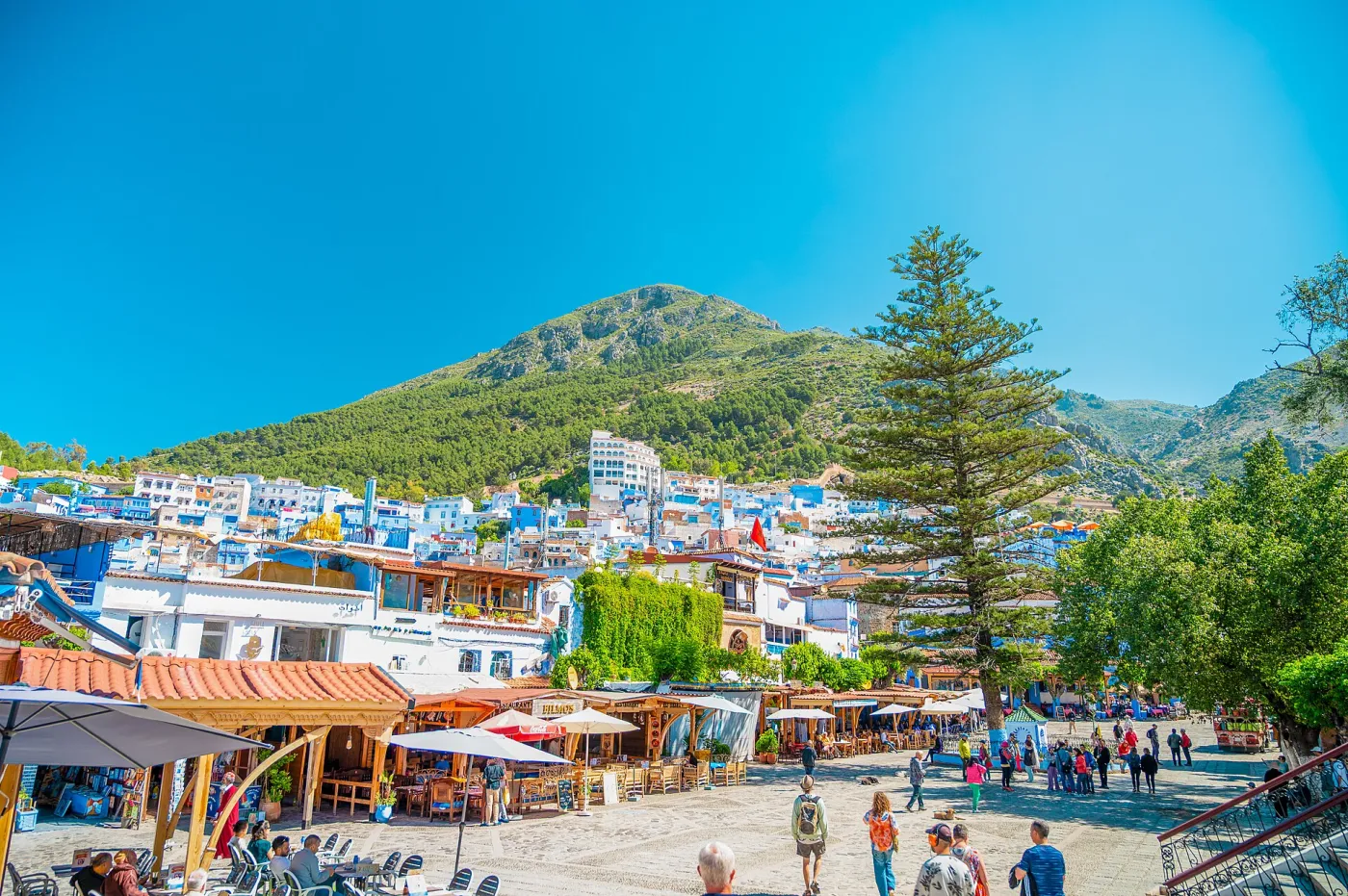
Spring gives green valleys, snowcapped Atlas peaks visible from Marrakech and comfortable walking weather in the Fes medina. The Rif around Chefchaouen is at its greenest, and the Dades Valley's rose harvest peaks in early May, when Kelaat M'Gouna holds its rose festival. The downside is demand: Easter and the May bank holidays push up riad prices, so book ahead.
Summer (June–August): coast and mountains
Inland heat is the defining factor. Marrakech averages 37 °C in July, with heatwaves above 45 °C, and the Sahara is uncomfortable outside dawn and dusk. Summer is, however, the best time for Essaouira, where the trade wind keeps highs around 22–25 °C, and for trekking in the High Atlas. If you go to the desert, choose early starts and a camp with shade.
Autumn (September–November): warm, golden and quieter
Autumn matches spring for weather and is usually less crowded. The heat breaks from mid-September, the dates are harvested around Erfoud and Rissani in October, and November still offers 20–22 °C in Marrakech. Autumn is our favourite season for the desert because nights are warm enough to sit outside at camp.
Winter (December–February): sunny but cold at night
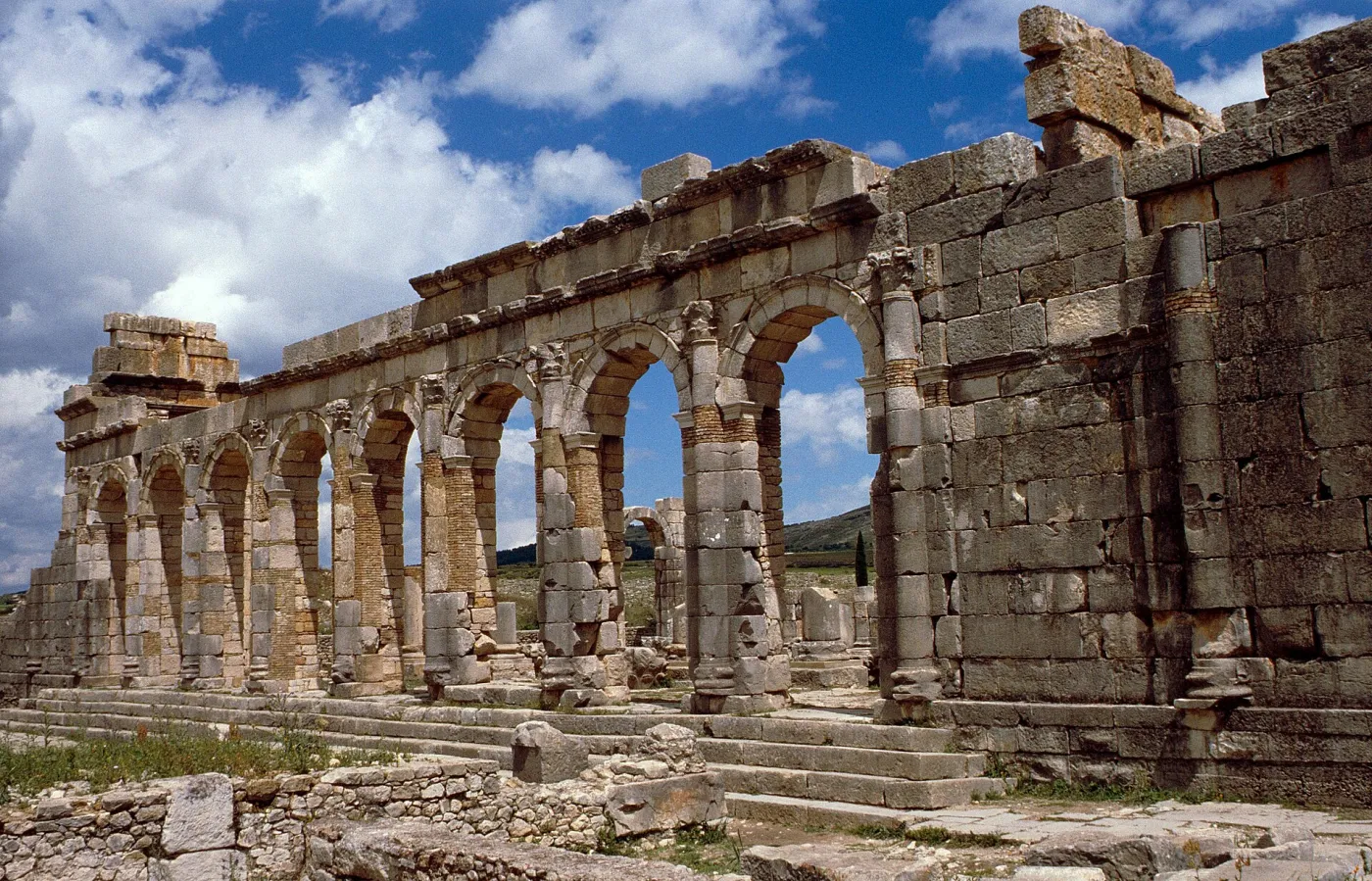
Winter days in Marrakech are often bright and 18–20 °C, but riads can be cold after sunset because many have no central heating. The Tizi n'Tichka pass (2,260 m) can close for a few hours after snowfall, and desert camps need extra blankets. In return you get the Atlas under snow, lower prices outside the holiday weeks and far fewer visitors at sites like Volubilis.
Ramadan and public holidays
Ramadan moves about 11 days earlier each year. In 2027 it is expected to run from around 8 February to early March (exact dates depend on the moon sighting). Tourist sites, hotels and tours operate normally, but many local restaurants close during daylight, the pace slows in the afternoon, and the evenings after iftar are lively. Eating and drinking discreetly in public during the day is expected. Eid al-Adha and Throne Day (30 July) can affect transport and opening hours.
Best time by activity
- Sahara desert tour: March–May and late September–November.
- Climbing Toubkal without winter gear: May–October.
- Imperial cities (Fes, Meknes, Rabat): March–May and October–November.
- Beach and surfing: June–September for warmth, October–March for Atlantic surf swells.
- Lowest prices: January, early February and late November.
Packing by season
- Spring and autumn: light layers, a fleece for the desert night, closed shoes for the medina.
- Summer: loose long sleeves, a wide-brimmed hat, high-SPF sunscreen, a refillable bottle.
- Winter: a warm jacket, thermal base layer for the camp, a scarf for the Atlas passes.
Also check the practical side of your trip in our Morocco travel tips for first-time visitors, and see how season affects prices in our Morocco budget breakdown.
Frequently asked questions
What is the cheapest month to visit Morocco?
January (after the New Year week), early February and late November usually have the lowest riad and flight prices. The weather is still sunny by day in Marrakech, but you will need warm clothes in the evenings and in the desert.
Is August too hot for Morocco?
For the Sahara and Fes, August is uncomfortable: afternoon temperatures of 38–45 °C are common. It is fine for the Atlantic coast, Chefchaouen and the High Atlas, and a desert trip can still work if you only move in the early morning and late afternoon.
Does it rain much in Morocco?
Rain falls mainly between November and March, and mostly in the north: Chefchaouen and Tangier are the wettest places tourists visit. Marrakech averages only a handful of rainy days a month even in winter, and the Sahara is almost dry year-round.
When is it safe to cross the Atlas in winter?
The Tizi n'Tichka is kept open by snowploughs, but after heavy snowfall it can close for several hours. Experienced drivers check conditions in the morning and adjust departure times, which is another reason to travel with a local operator between December and February.
Plan your dates around a tour
If spring or autumn fits your calendar, our 7-day Morocco tour through the imperial cities and Sahara is timed to reach each stop at its best hours, with free riad pickup in Marrakech and a licensed driver, from €690 per person. It runs year-round, and we adjust camp and route details in summer and winter. You can compare it with our other multi-day tours across Morocco or ask us on WhatsApp which dates work best.
Comments