In this guide
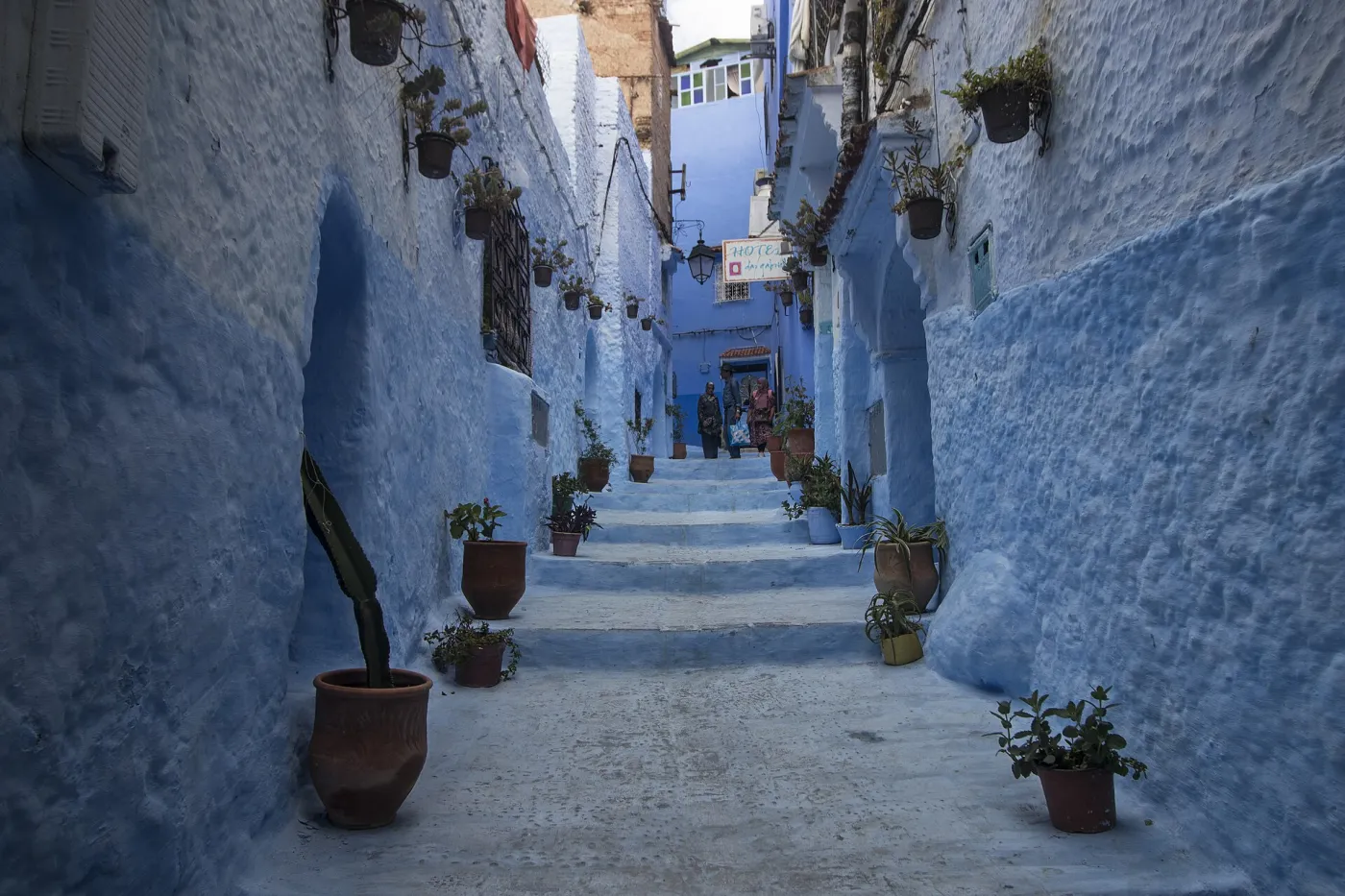
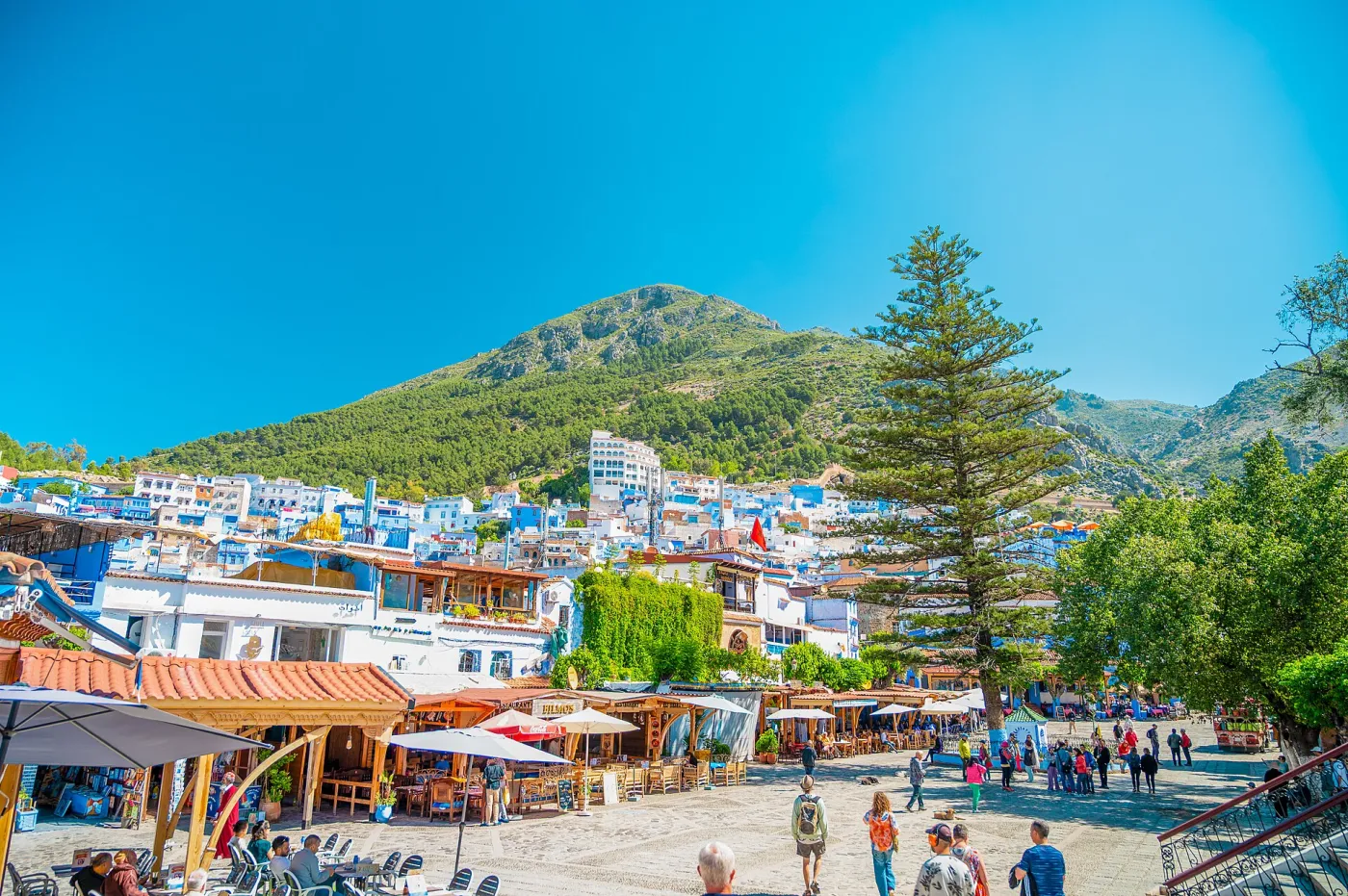
Chefchaouen is a small mountain town in the Rif, about 200 km north of Fes, famous for its blue-washed medina. One full day covers the main sights — Plaza Outa el-Hammam, the kasbah, Ras el-Maa spring and the Spanish Mosque viewpoint at sunset — while a second night lets you hike to the Akchour waterfalls. The best months are March to June and September to November.
A short history of the Blue City
Chefchaouen was founded in 1471 by Moulay Ali Ben Rachid as a fortress against Portuguese raids from the coast. Muslim and Jewish refugees from Andalusia settled here after 1492, which explains the whitewashed walls, tiled roofs and Andalusian feel of the medina. The town remained closed to Christians until the Spanish occupation in 1920. The name comes from the Amazigh word for "horns", after the two peaks above the town.
Why is Chefchaouen blue?
There is no single documented answer. The most common explanations are that Jewish residents introduced blue as a spiritual colour, that it keeps mosquitoes away, and that it keeps houses cool. What is certain is that the blue has spread substantially in recent decades, partly because it attracts visitors, and residents repaint every year.
Things to do in Chefchaouen
- Plaza Outa el-Hammam: the main square, with cafés facing the kasbah and the octagonal minaret of the Grand Mosque.
- The Kasbah: the 18th-century ochre fortress with a garden, a small ethnographic museum and a tower view over the medina. Entry is roughly 60–70 MAD.
- Ras el-Maa: the spring at the eastern edge of the medina, where women still wash clothes in the channels.
- The Spanish Mosque: a disused 1920s mosque on the hill opposite, reached by a 20–30 minute walk from Ras el-Maa. It is the classic sunset viewpoint over the town.
- Blue lanes and photo spots: the quarters of Souika and Andalous, best explored before 9 am when streets are empty.
- Local produce: goat's cheese from the Rif, woven wool blankets and the striped red-and-white skirts worn by Jebala women.
Please respect residents: many blue doors are private homes, and people may not want to be photographed.
Day trips: Akchour and Talassemtane
The Akchour waterfalls lie about 30–35 km from Chefchaouen in Talassemtane National Park, around 45 minutes by car. From the car park, a trail follows the river: the first falls take about 45–60 minutes each way, the larger "Grand Cascade" roughly 2–3 hours each way, and a separate trail reaches God's Bridge, a natural rock arch about 25 m high. Wear sturdy shoes, bring water and avoid the gorge after heavy rain.
How to get to Chefchaouen
| From | Distance | By car | By bus |
|---|---|---|---|
| Fes | about 200 km | 3.5–4 h | around 4–5 h (CTM) |
| Tangier | about 115 km | 2–2.5 h | around 3 h |
| Rabat | about 250 km | 3.5 h | around 4–5 h |
| Marrakech | about 600 km | 8–9 h | around 10–11 h |
Times are approximate. There is no train station; the nearest airport is Tangier (Ibn Battouta). Buses stop at the bus station below the medina, a steep 15-minute walk or short taxi ride from Plaza Outa el-Hammam. Because Chefchaouen sits so far north, it fits best between Fes and Rabat, as in our 10-day Morocco route.
How many days in Chefchaouen?
Many tours stop for only a few hours on the way from Fes. That shows you the medina at its busiest. One night is the practical minimum; two nights let you see the empty lanes at dawn, the sunset from the Spanish Mosque and Akchour without rushing.
Best time to visit Chefchaouen
The Rif is wetter and cooler than the south. At about 600 m, Chefchaouen has hot but not extreme summers (typically around 30 °C in July–August), and cold, rainy winters with occasional frost from December to February. Spring brings green hills and running waterfalls; September–November is dry and mild. Compare regions in our best time to visit Morocco guide.
Practical tips
- Cannabis: the surrounding Rif grows it and you will be offered it. Recreational use and possession remain illegal for tourists; decline firmly. See our wider advice on safety in Morocco for visitors.
- Money: there are ATMs near Plaza Outa el-Hammam and on the main road, but carry cash for small shops.
- Accommodation: small riads and guesthouses inside the medina; expect steps and no car access.
- Language: Darija and Spanish are more widely spoken here than French; basic English is common in tourist businesses.
- Food: try bissara (fava bean soup), grilled goat's cheese and fresh trout from the mountain rivers.
Where to stay and eat
For atmosphere, stay inside the medina near Plaza Outa el-Hammam or in the upper quarters around Bab Onsar, which have the best views but the steepest steps. Guesthouses outside the walls near the main road are easier if you have heavy luggage or a car. Most places include breakfast with local bread, olive oil, cheese and honey.
Restaurants around the square serve tagines, couscous and grilled meat at similar prices, typically 50–90 MAD a main course. Many close relatively early outside summer, so eat by 9 pm. Alcohol is not available in the medina.
Frequently asked questions
Is Chefchaouen worth visiting?
Yes, if you give it at least one night. The town itself is small and can feel crowded at midday, but the mountain setting, the calm pace compared with Fes and Marrakech, and the hiking nearby make it a highlight of a northern route.
Do I need a guide in Chefchaouen?
No. Unlike Fes, the medina is small and easy to navigate. A guide is useful only for hikes in Talassemtane National Park.
Can I visit Chefchaouen as a day trip from Fes?
It is possible but tiring: roughly 7–8 hours of driving for a few hours in town. An overnight stay is far better.
Adding Chefchaouen to your Morocco trip
Our 10-day tour including Chefchaouen includes an overnight stay in the Blue City between Fes and Rabat, with a licensed driver, a Sahara camp night and guided Fes, from €1,190 per person with free riad pickup in Marrakech. It can be run privately with an extra night for Akchour. Browse our other Morocco multi-day tours or send us a WhatsApp message to adjust the route.
Comments